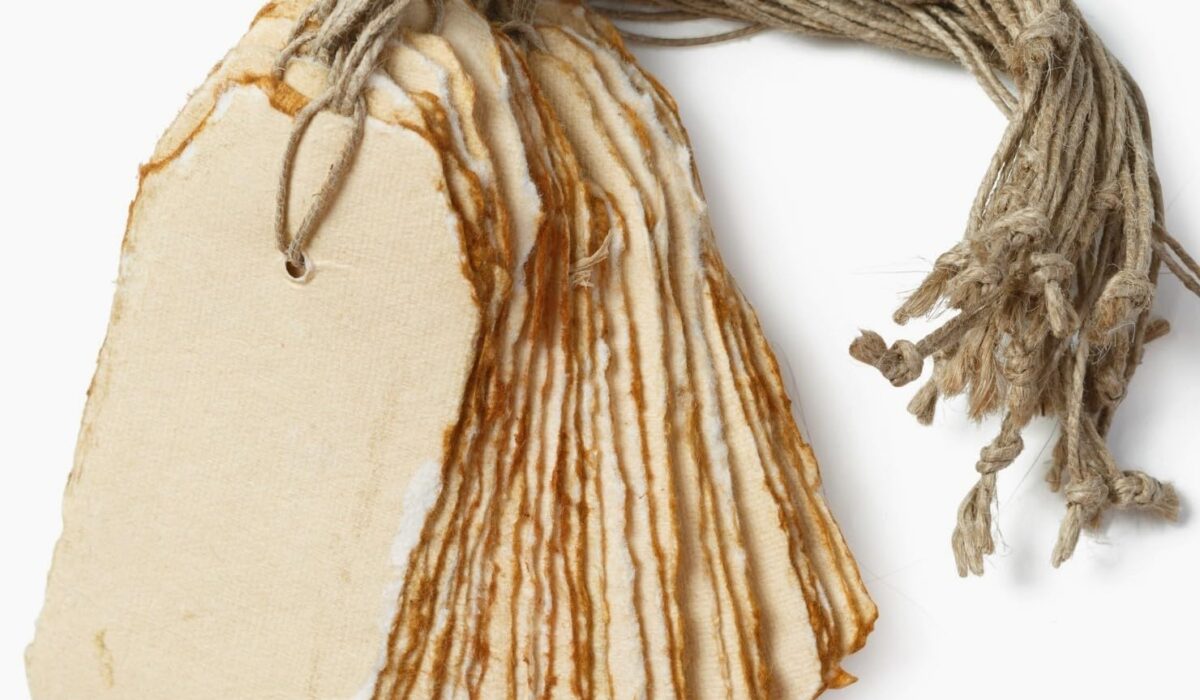
A tag with a rough, torn-look edge and a loop of jute string reads as vintage before anyone even looks at what’s written on it. That’s the trick behind most of what shows up when you search vintage hat tags or vintage clothing tags — almost none of it is actually old. It’s new stock, deliberately made to echo the look of a general-store price tag from decades ago.
That’s not a bad thing once you know it. A reproduction tag costs less to buy in bulk, survives shipping, and you can write on it — a real 1940s tag usually can’t take a second round of ink without falling apart.
Quick answer: For a genuinely old-store look, go with deckle-edge kraft paper tags on jute string or plain kraft hang tags — both echo the price tags department stores used before barcodes. If you’re labeling handmade clothing or knitwear, sewn-in cotton or satin labels give a more authentic vintage-clothing-tag finish than a hanging paper tag ever will.
| Tag | Best for | Material | Attachment | |
|---|---|---|---|---|
| Wanderings Deckle-Edge Tags | General-store price-tag look | Cold-press cardstock | Jute string | |
| SallyFashion Kraft Hang Tags | Bulk hat & clothing tagging | Kraft paper | Attached string | |
| Uniclife Writable Price Tags | Handwritten sizing/pricing | Kraft paper | Jute twine | |
| Vmiapxo Tagging Gun Kit | Attaching tags without sewing | Steel needle + barb fasteners | Plastic barb | |
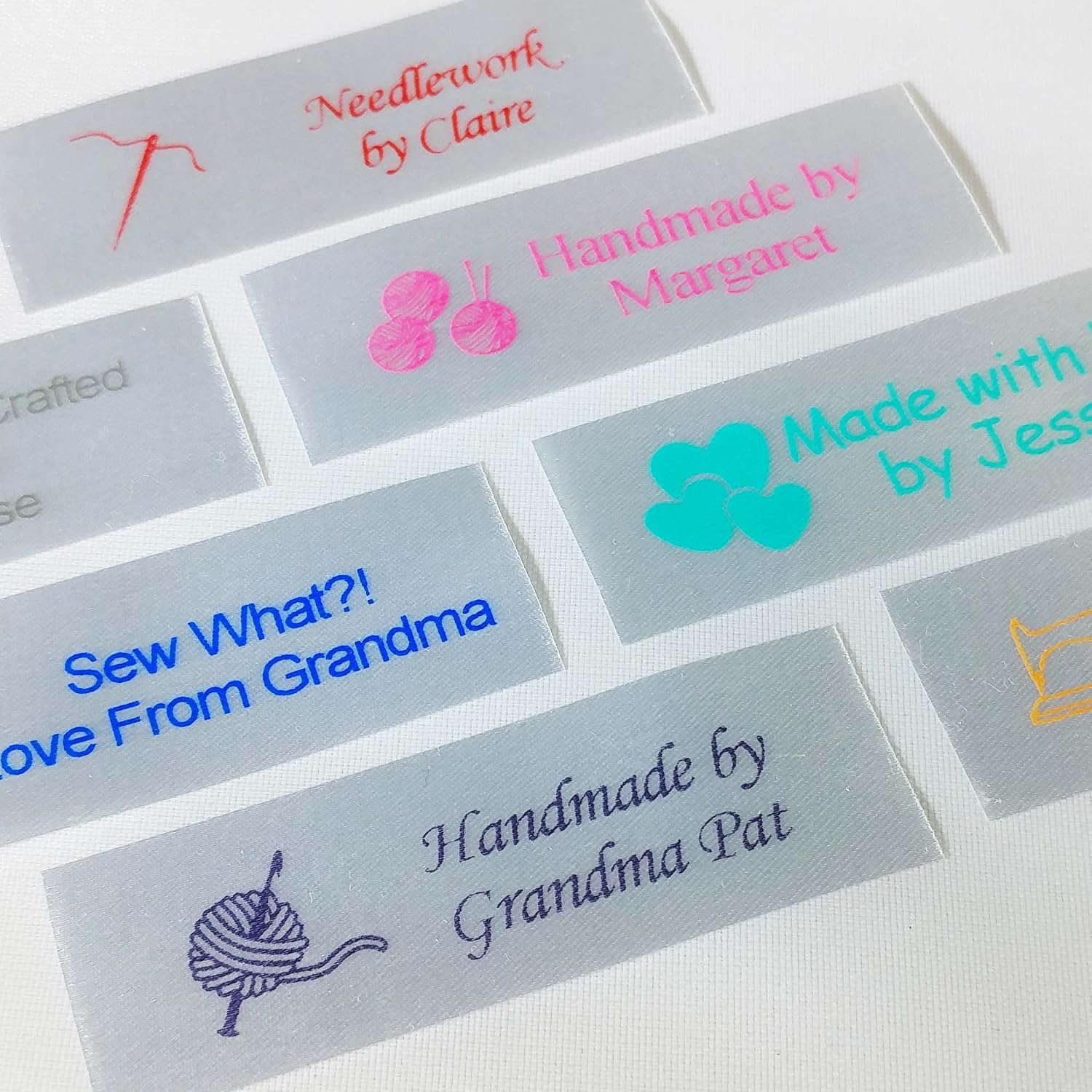
| Personalized Satin Sewing Labels | Sewn-in vintage clothing tags | Satin ribbon | Sewn seam | |
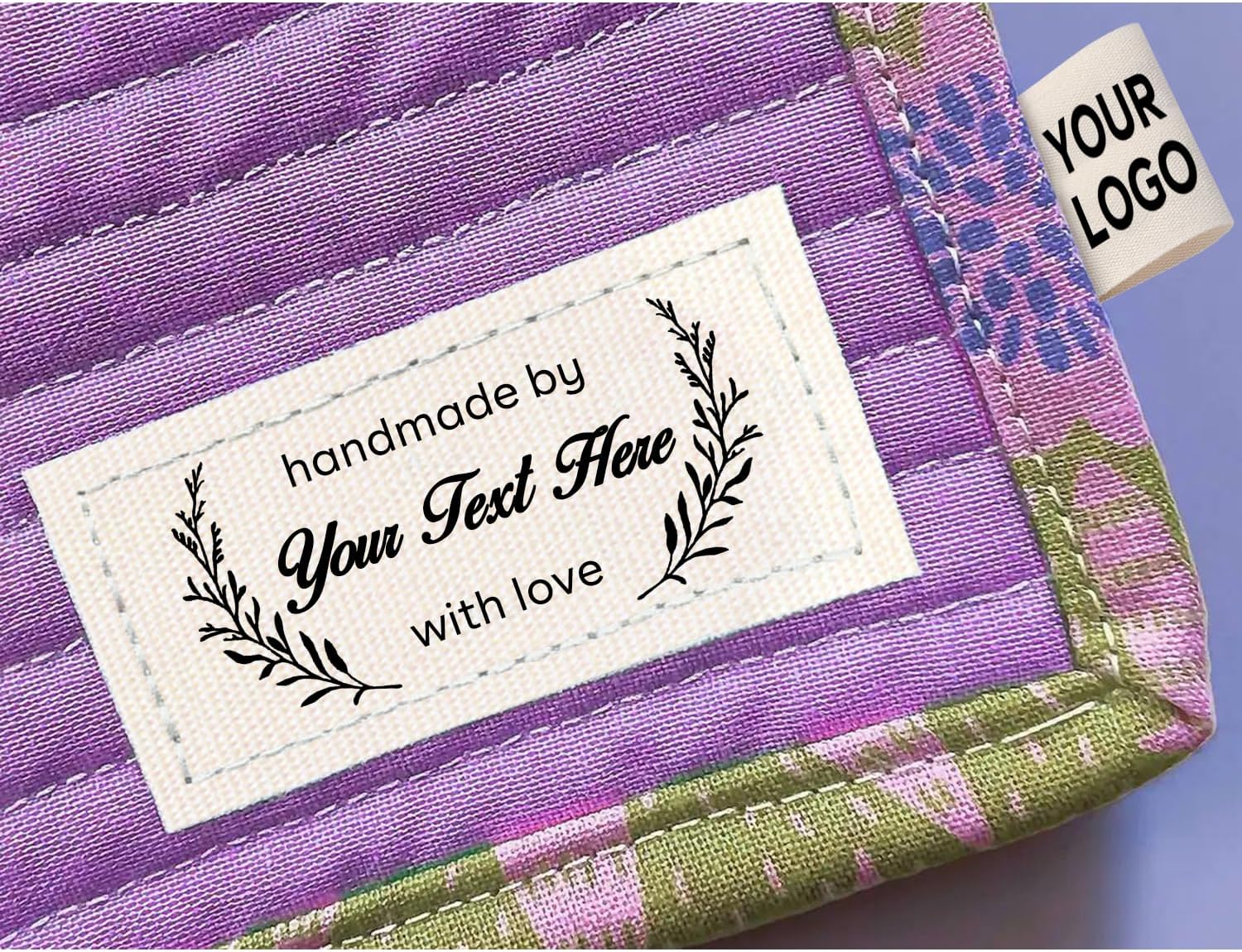
| Custom Cotton Fabric Labels | Handmade garment branding | 100% cotton | Sewn seam | |
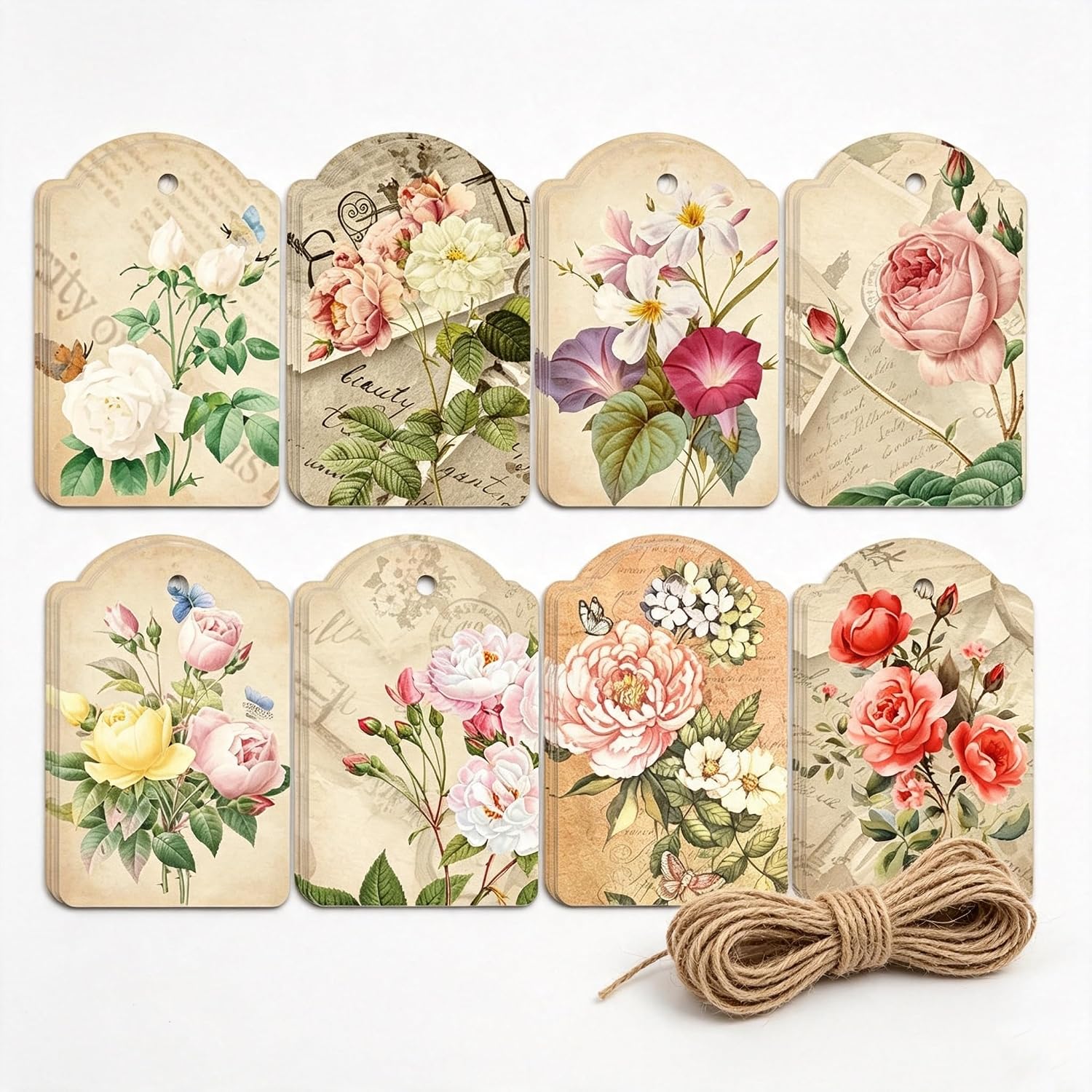
| Vintage Flower Hanging Tags | Gift wrapping, party favors | Cardstock | String | |
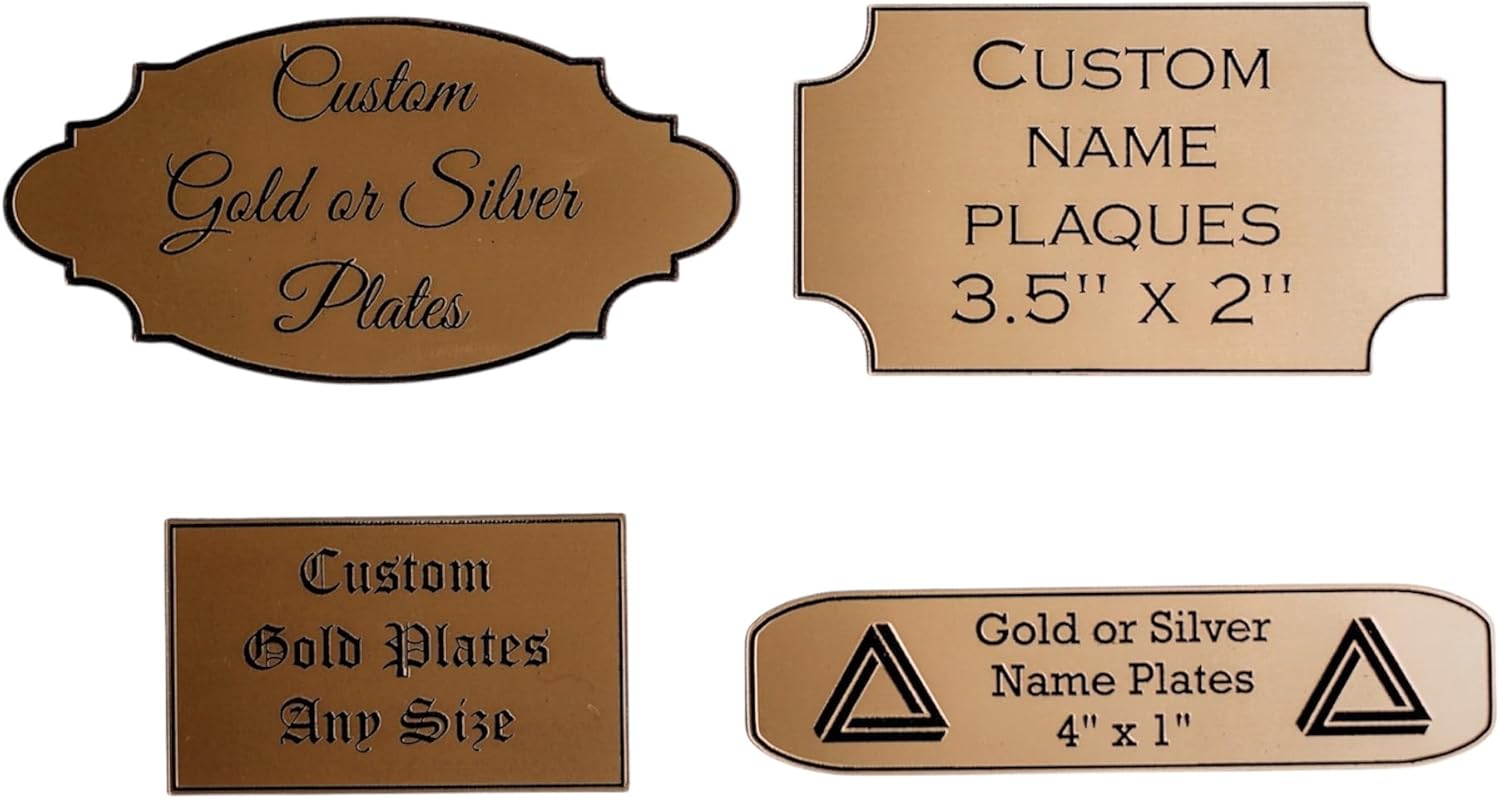
| Engraved Metal Tag | Durable luggage/keepsake tag | Brass/silver metal | Adhesive backing |
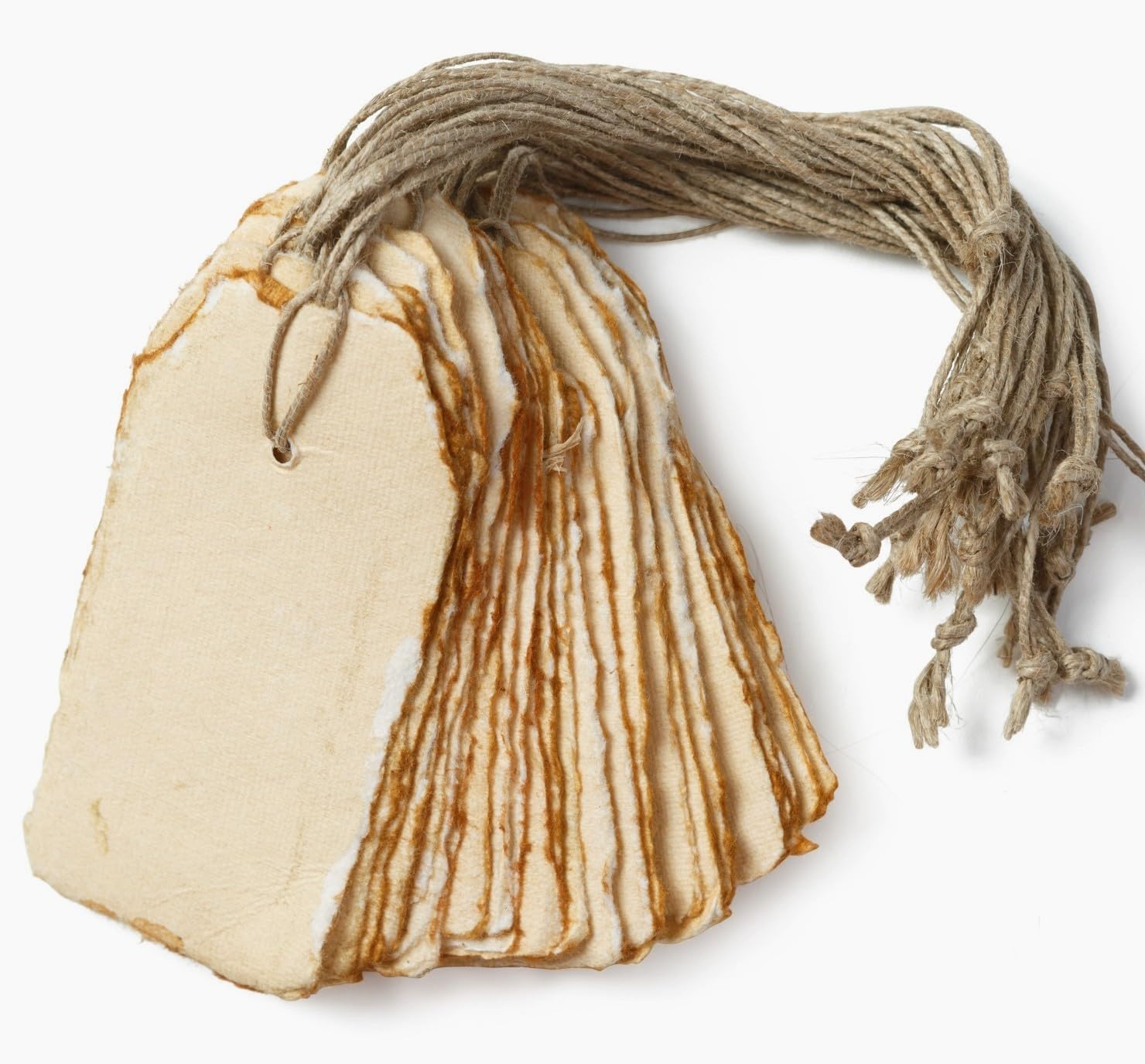
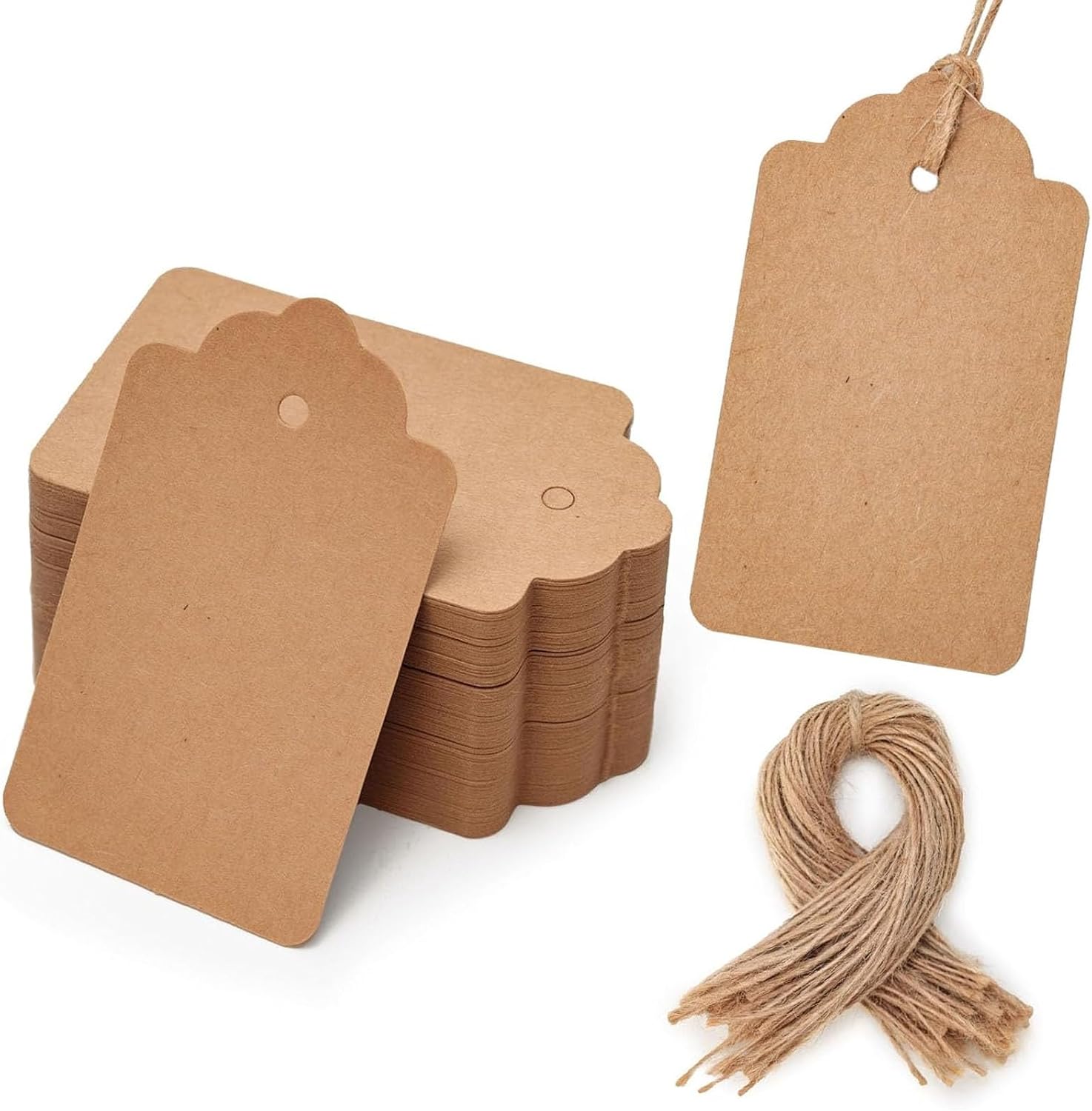
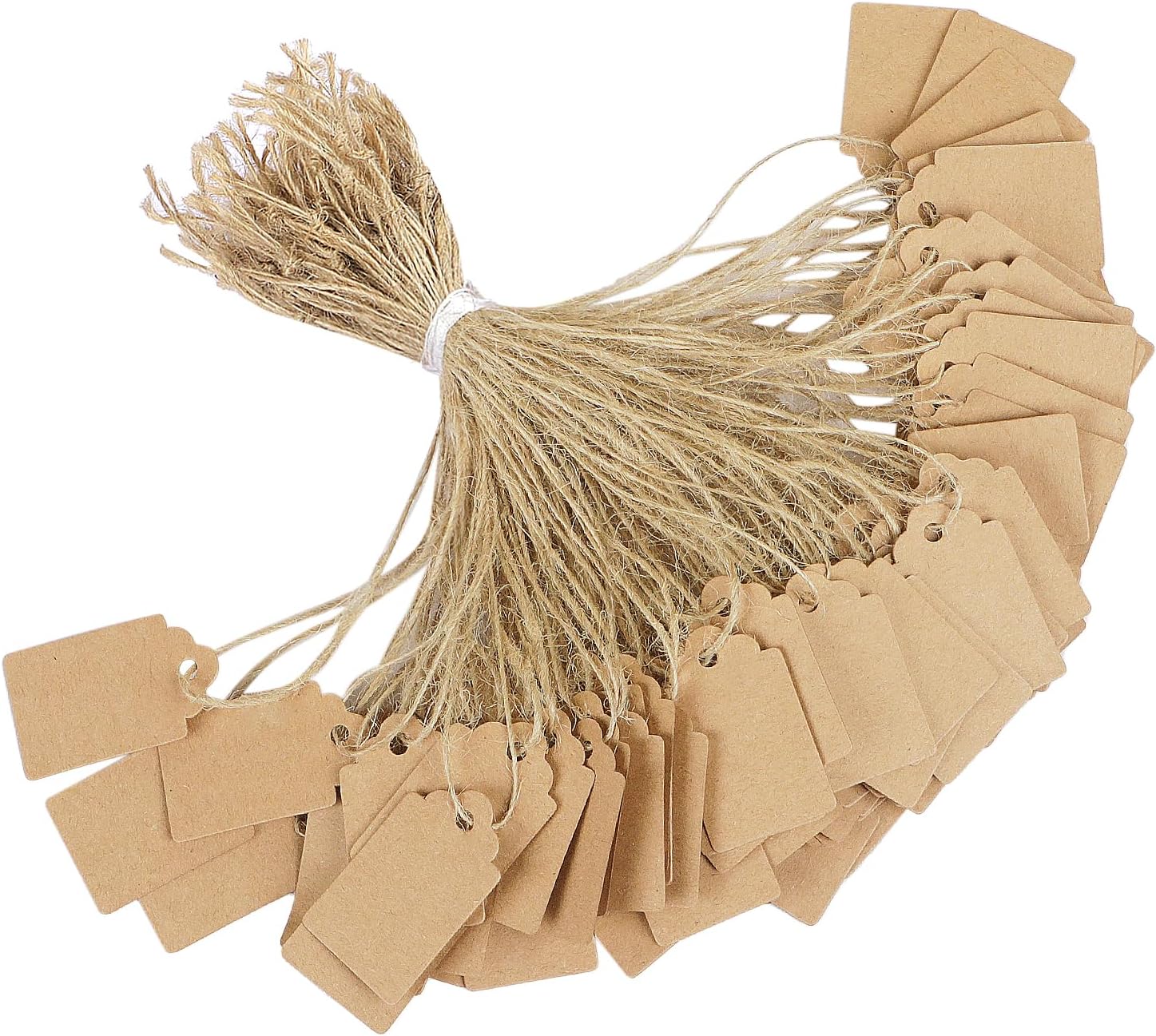
Deckle edges — the rough, feathered border you see on the tags above — started as a byproduct of hand papermaking, where pulp was pulled from a mold using a wooden frame called a deckle and the edges dried unevenly. Manufacturers now cut that same ragged edge into machine-made cardstock on purpose, because it’s the single visual detail that separates “vintage-look” from “printer paper cut with scissors.” Kraft brown tones do the rest of the work: department stores used cheap, undyed kraft stock for price tags well into the mid-1900s, so the color alone carries decades of association before a single word is written on it.
Best for: the most authentic old general-store look
Wanderings Handmade Deckle-Edge Tags with String
These are cut on heavy 150 GSM cold-press cardstock — the same weight range used for watercolor paper, which is why the deckle edge here looks torn rather than printed. At 2 by 4 inches, they’re sized closer to a real vintage price tag than the smaller hang tags most craft stores sell, which matters if you’re using them for anything meant to be read from a few feet away, like a place card or a gift tag hanging on a wrapped box. The pack ships as 25 tags with string already threaded through the punched hole, so there’s no separate step of buying twine and cutting lengths yourself. What sells this style isn’t the string or the size, though — it’s that uneven, slightly fibrous edge that a straight paper cutter simply can’t replicate.
Check Price on Amazon →
What Actually Made Old Clothing Tags Look Vintage?
It wasn’t the string, and it wasn’t even the paper stock — it was the printing method. Before offset and digital printing became cheap, small manufacturers used letterpress or simple rubber stamps to mark tags, which left a slightly uneven ink depth and the occasional smudge. That imperfection is what modern reproductions are chasing when they use a slightly rough font or a faux-stamped look.
Size and shape are the second tell. Old hang tags were rarely perfect rectangles or circles — die-cutting equipment wasn’t precise, and a shop owner often trimmed tags by hand from a larger sheet. A tag that’s just slightly asymmetrical, or has a corner that’s not quite square, reads as more genuine than one with laser-cut precision.
Best for: bulk tagging on hats, clothing, and craft projects
SallyFashion Kraft Hang Tags with String, 100-Pack
This set solves the problem that comes up the moment you actually need more than a handful of tags: buying single vintage-style tags one at a time gets expensive and slow. A hundred kraft paper tags at 1.7 by 2.8 inches, string already attached, covers a full batch of handmade hats, hand-sewn garments, or wedding favors in one order. The size is close to what a 1950s department store used for garment pricing — small enough to loop through a buttonhole or hat brim without looking oversized, but with enough surface area to handwrite a size, price, or short note. Kraft brown is the one color choice here, which keeps every tag in the batch visually consistent instead of mixing finishes.
Check Price on Amazon →
How Do You Attach a Tag Without It Looking Store-Bought New?
String attachment matters more than most people expect. A perfectly centered machine-punched hole with a factory-tied bow reads as new no matter how distressed the paper looks. Off-center holes, a simple overhand knot, or twine instead of ribbon all shift the impression toward handmade.
For clothing specifically, sewn-in labels beat hanging tags for authenticity, because that’s how garments were actually marked historically — hang tags were for retail display, sewn labels were for the finished item the customer took home.
Best for: handwritten sizing and pricing on kraft stock
Uniclife 200-Pc Writable Kraft Price Tags with Jute Twine
Jute twine instead of cotton string or ribbon is the detail that separates this set from a generic party-favor tag — jute was the cheap, durable cordage most general stores had on hand, so it reads as period-correct in a way that a satin bow doesn’t. At 1 3/8 by 7/8 inches, these are genuinely small, closer to a jewelry or accessory tag than a garment tag, which makes them a fit for hat pins, small clothing accessories, or attaching a size card to a folded item rather than a full hat brim. The kraft surface takes pen or pencil cleanly, which matters if the plan is to hand-letter every tag rather than print a batch — some coated kraft stocks smear under ballpoint, this one doesn’t.
Check Price on Amazon →
Ready to actually tag a batch of items instead of just admiring the paper? Each tag above is a physical, ready-to-use product — no printing or cutting required, just thread the string or sew the label and it’s done. If you’re outfitting a full rack of handmade or resale clothing at once, a tagging gun saves the time of hand-threading every single tag.
Best for: attaching dozens of tags fast without sewing
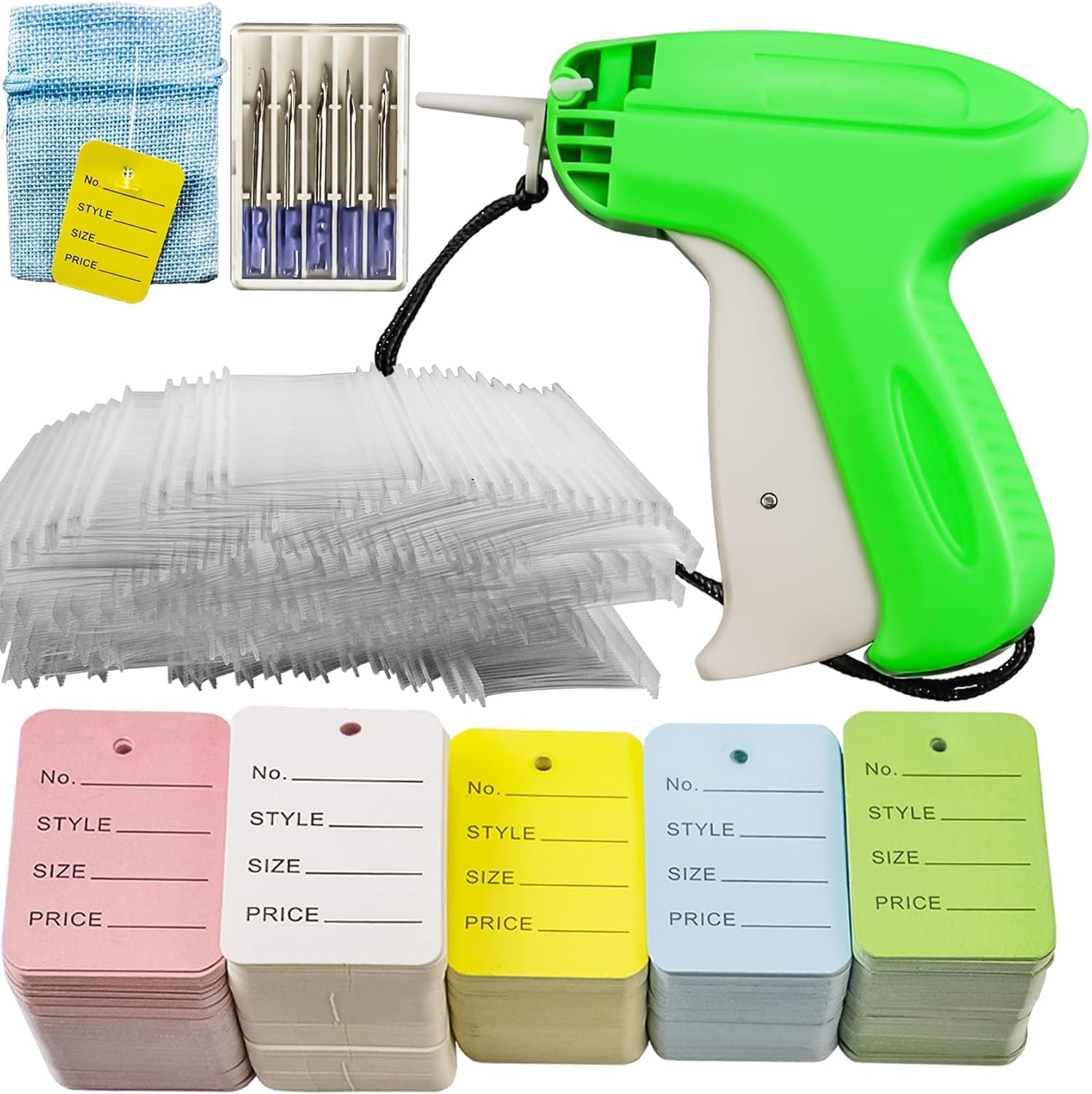
Vmiapxo Price Tagging Gun Kit for Clothing
Retail stores stopped hand-tying string tags decades ago for exactly this reason: a barb-fastener gun attaches a tag in under two seconds, no needle and thread required. The kit comes with six steel needles, 500 colored price tags, and 5000 plastic barb fasteners, which is enough volume for a full seasonal batch of resale or handmade clothing rather than a one-off craft project. The barb goes through a seam or fabric edge and locks the tag in place from the back, the same mechanism department stores still use on new clothing today — it’s not trying to look vintage, but it’s the fastest way to get a vintage-style tag actually attached to fabric at scale.
Check Price on Amazon →
Why Do Sewn-In Labels Read as More Authentic Than Hang Tags?
A hang tag comes off the moment someone buys the item — it was never meant to stay attached long-term. A sewn-in label is permanent, which is exactly why old garments that survive decades still have their original label intact while the price tag is long gone.
That permanence is also what makes a sewn label feel more like a real vintage clothing tag when you’re recreating the look now: it’s stitched into the seam the way a maker’s mark or size tag always was, not just looped through a buttonhole for display.
Best for: sewn-in labels on knitting, quilting, and sewing projects
Personalized Satin Sewing Labels for Handmade Crafts
Satin ribbon labels have been the standard for maker’s marks in home sewing for generations — long before printed care tags existed, a small woven or satin strip sewn into a seam was how a garment or quilt was identified as handmade by a specific person. At 3/4 by 2 1/2 inches, these are sized to fold and sew into a hem or seam without adding noticeable bulk, and the pack of 50 covers a full run of knitted or quilted pieces made as gifts or for sale. Because they’re sewn rather than hung, they survive washing and years of use the way a paper tag never would, which is the whole reason sewn labels are still the closest thing to an authentic vintage clothing tag on a finished item.
Check Price on Amazon →
Want more ways to bring that same hand-finished, old-paper look into a project? Our junk journal gift kit guide covers the same kraft and deckle-edge materials for paper crafting, and our vintage paper for scrapbooking roundup pairs well with these tags for a matching gift-wrap or keepsake set.
Which Other Tag Styles Are Worth Knowing About?
Not every vintage-style tag is paper. Fabric and metal both show up under the same keyword because both were used historically for different jobs — fabric for something meant to stay on the garment, metal for something meant to survive rougher handling, like luggage or a keepsake.
Best for: custom cotton labels on handmade garments
Custom Cotton Fabric Labels for Handmade Items
Cotton labels sit between a hang tag and a satin sewing label — sewn in like a permanent label, but printed rather than woven, which keeps the cost down when a maker needs a whole roll rather than a handful. These come in 100% cotton, single-color printing, available pre-cut or as a ribbon roll you cut to length yourself, in runs from 50 up to 500 pieces. That range matters for anyone selling handmade clothing or crochet at any real volume — a 500-piece roll works out to pennies per label, where hand-lettering the same number of paper tags would take hours. The cotton also takes ink more evenly than kraft paper does, so small text and logos stay legible after repeated washing.
Check Price on Amazon →
Best for: gift wrapping and party favor tags
Vintage Flower Hanging Gift Tags with String
These lean decorative rather than functional — a die-cut flower shape on cardstock instead of a plain rectangle, aimed at gift wrapping, wedding favors, and party decor rather than labeling clothing. The 80-piece pack is enough to tag an entire batch of party favors or wrapped gifts in one go, and the pre-punched hole with string already threaded means no extra assembly step at the table. Because the shape itself carries the vintage cue, the color palette can lean softer and more varied than a strict kraft-and-string tag would allow, which is why this style shows up more often in wedding and gift contexts than in clothing tagging.
Check Price on Amazon →
Best for: a durable metal tag that survives rough handling
Engraved Vintage-Style Metal Tag with Adhesive Backing
Paper and fabric both fail eventually under repeated handling, which is exactly why anything meant to travel — luggage, keepsake boxes, tool handles — historically got a metal tag instead. This one is engraved rather than printed, so the lettering is physically cut into the brass or silver-tone surface and won’t fade, scratch off, or wash away the way ink on paper does. The adhesive backing skips the need for drilling a hole or looping string through it, which makes it a faster option for a small trophy label, luggage marker, or keepsake tag than any of the paper or fabric options above. It’s the one product here that isn’t trying to look “vintage” through wear or distressing — it’s vintage in function, doing the same job metal tags have always done.
Check Price on Amazon →
Frequently Asked Questions
What’s the difference between a vintage hat tag and a vintage clothing tag?
They’re the same basic product used two ways — a small string-attached tag looped through a buttonhole, hat brim, or seam. “Hat tag” just describes the use case; the tag itself is usually identical kraft or cardstock hang-tag stock.
Are deckle-edge tags stronger or weaker than clean-cut tags?
Roughly the same, since the deckle effect only changes the edge, not the paper weight. A 150 GSM deckle-edge tag holds up as well as a clean-cut tag of the same weight.
Can I write on kraft paper tags with a regular pen?
Most kraft stock takes ballpoint or gel pen cleanly. Fine-tip markers tend to bleed slightly on uncoated kraft, so test one tag before writing an entire batch.
Do sewn-in labels need a special needle or thread?
No — a standard sewing needle and matching thread work for satin or cotton labels. A sewing machine’s straight stitch is faster for a large batch than hand-sewing each one.
Is a metal tag better than paper for outdoor or heavy-use items?
Yes. Metal tags resist moisture, fading, and physical wear far longer than paper or fabric, which is why they’re the standard choice for luggage tags and tool labels rather than clothing.
Key Takeaways
- Want the most authentic old general-store look? The Wanderings Deckle-Edge Tags come closest to a real vintage price tag.
- Tagging a full batch of hats or clothing? The SallyFashion Kraft Hang Tags cover 100 pieces in one order.
- Labeling handmade knitwear or sewn items? Personalized Satin Sewing Labels read as more authentic than any hanging tag.
- Deckle edges and kraft-brown coloring are the two visual details that separate a genuinely old-look tag from printer paper cut with scissors.
- Sewn-in labels survive washing and years of use; hang tags are for display only and were never meant to stay attached long-term.
- A tagging gun with barb fasteners is worth it once you’re tagging more than a handful of items — hand-threading string tags one at a time doesn’t scale.
About the Author: Alina fv researches vintage-style decor and print-on-demand design trends for Vintage Studio, tracking what actually sells versus what just looks good in a listing photo.