Vintage National Geographic magazines are easy to love, and a vintage National Geographic cover is hard to reuse. In the US, the picture on an issue published in 1930 or earlier is free to use in 2026. A later cover is not, and the yellow border and the magazine name are protected on their own terms. Below is the check I run before I print any old cover, and the substitute I reach for when the answer is no.
Quick answer: what you may reuse from a vintage National Geographic cover
Quick answer:
- Free to reuse: the artwork on an issue published in the US in 1930 or earlier, because the 95-year term has run out.
- Check first: issues from 1931 to 1963 are protected only if the copyright was renewed. Without a renewal it lapsed.
- Not free: every issue from 1964 on, which was protected automatically.
- Separate from all of it: the magazine name and the yellow border are a trademark, and a trademark does not expire while it is in use.
- The safe route: keep the look, drop the cover. Old paper, a blank masthead frame and a border give you the feel without the owner.
This is how I read the rules, not legal advice. If you plan to sell a lot of something, ask someone who does this for a living.
Want the look without the risk? Vintage magazine ephemera sets are where I start.
A cover is three things at once, and each has its own owner
People ask whether they may use a cover as if it were one object. It is three, stacked.
- The picture. A photograph or painting, made by one person. That person, or whoever they assigned it to, holds the right to it.
- The layout. The way the picture, the lines of type and the border sit together. The publisher holds that, and it ages on its own clock.
- The name and the frame. The masthead letters and the yellow rectangle around the picture. These work as a brand mark, and a brand mark is protected for as long as it identifies the product.
So a cover can be old enough for the layout to be free and still carry a name you may not put on a shirt.
Each use below turns on which of the three layers your print actually copies.
Need parts that belong to nobody? Start with vintage paper ephemera.
A scan makes it harder, not easier. A scan of a free cover is a copy of a free thing, but a page that hosts the scan may still say all rights reserved.
That statement does not create a right the scan never had. It does tell you the site will not help you if a buyer asks where the file came from.
The 1930 line: which old issues are free to reuse in the US
Searches for national geographic covers vintage mostly land on prices, so here is the part they skip.
US copyright on a published work runs 95 years from publication. In 2026 that reaches back to everything published in 1930. The table is the whole rule on one screen.
| Issue published | Status in the US in 2026 | What I do with it |
|---|---|---|
| 1930 or earlier | Public domain; the term has run out | Use the picture and layout; keep the name and border out of a product |
| 1931 to 1963 | Protected only if the copyright was renewed | Check the renewal record for that issue before printing |
| 1964 and later | Protected automatically | Do not print or sell; keep it for your own collection |
Two things trip people up. First, the date that counts is the publication year printed inside the issue, not the year a scan was uploaded. Second, the rule is about the US.
A work free here can still be protected elsewhere, so if your shop sells abroad, the same cover can be a problem in a country where the term is counted differently.
Free to reuse means free in a specific place, for a specific layer, in a specific year. When I cannot say all three, I treat the cover as protected and move to a substitute.
On the wrong side of the line, vintage magazine cover templates with a stated licence do the same job.
The 1931 to 1963 band is the one people skip. Many works from those years were never renewed and are free, but you only learn that by looking up the issue.
The cover photograph may also have been licensed separately from the rest of the issue, so a renewed issue can still hide a free picture and a free issue can hide a protected one.
The yellow border is a trademark, and it outlives the copyright
The yellow frame has been on the cover since about 1910. It is the first thing your eye reads, and the first thing a lawyer reads too.
Because it works as a brand mark, it stays protected after the picture inside it has gone free.
That is why an old issue can be perfectly free and still be risky on a mug. Print the old picture alone, and you are on safe ground.
Print the picture inside a yellow rectangle with the magazine name above it, and you have rebuilt the brand.
- Safe: the free picture cropped to the artwork, with your own frame and your own lettering.
- Risky: the picture, the yellow frame and the masthead together, sold as a product.
- In between: a personal poster you hang on your own wall. A trademark is about selling, so private display is the low-risk end, though I still would not post it as a shop mockup.
If the frame is what you love, make a new one. A vintage border frame in a colour of your own gives you the same eye-catching edge with nothing to infringe.
Owning a magazine is not the right to print its cover
Buying an old issue gives you the object. You may keep it, lend it, frame it or resell it. You do not get the right to make copies of what is printed on it.
That sounds obvious until you see how listings talk. A seller of a vintage issue will say the cover is gorgeous and the paper is original, and a buyer hears: mine to use.
It is not. You own one physical copy, and the image on it still belongs to whoever held the right when it was printed.
| You want to | The magazine you own lets you |
|---|---|
| Frame the issue and hang it | Yes, it is your object |
| Resell the issue | Yes, selling the copy you own is allowed |
| Scan the cover for a poster to sell | Only if the cover is free by the 1930 line |
| Cut a page for your own junk journal | Yes, one altered copy for yourself is the low-risk end |
| Print the cover on a shirt to sell | No, unless picture, layout and name are all free |
This is the gap the price guides never fill.
They tell you what an issue is worth as paper and stop there, because the question of the image is not the one they were built to answer.
For a print you may sell, vintage poster PNG sets that name commercial use are the better buy.
Wall art, junk journal, shirt: what each use risks

The same cover is a different risk in each of three uses. I sort them by who ends up holding the printed result.
- Junk journal and scrapbook, for yourself. The lowest risk. You are making one object for your own shelf, and an old page cut and glued is a long-standing habit of the hobby. The risk climbs once you sell the finished journal or post a kit made of scanned covers. Our vintage scrapbook paper guide shows what to use in that case.
- Wall art, for yourself or as a gift. Low to moderate. A free cover is fine. A protected one on your own wall is a private matter, but a gift run of twenty starts to look like a product. The vintage poster design guide has layouts that look like a cover without being one.
- A shirt or a mug to sell. The highest risk. Printing on a product to sell is exactly what the rights cover, and a shirt carries the picture, the name and the frame in one glance. Our sublimation PNG guide covers the file side. Pick art you own or a licence that says you may print it, such as vintage graphic tee PNG files.
For wall art, people hunt for a National Geographic vintage poster, and vintage National Geographic posters are where the shop pages pile up.
Demand sits with the shirt and the poster more than with the issue itself.
The phrase vintage National Geographic shirt is the fastest riser on Pinterest, at 361 searches a month, while the plain phrase vintage National Geographic sits at 3270 and vintage National Geographic magazines at 164.
People want the look on a thing they can wear or hang. That is the exact place where the rights question bites.
What 407 vintage paper sets say about the right to use
When you cannot print the cover, you buy a substitute, and the substitute comes with its own description. Here is what 407 sets of magazine ephemera, old paper, vintage ads and newspaper elements actually name.
| What the description names | How many of 407 |
|---|---|
| 300 dpi | 184 |
| PNG format | 130 |
| A size in inches | 92 |
| Transparent background | 66 |
| Commercial use | 19 |
| The word licence | 9 |
| A National Geographic cover | 0 |
A listing tells you the resolution far more often than it tells you the right: 184 name the dpi, 19 name commercial use.
If you are selling what you print, those 19 are the ones to read first.
You can filter for them on the shelf of commercial use vintage paper.
None of the 407 sets offers a cover, which is the sensible state of things. What they offer is the ingredients of a cover: paper, labels, frames, stamps and handwriting.
That is what you can legally build with, once you check the line about commercial use.
Before you buy any of them, open the licence line and look for two words. One says whether the file may be used on a product you sell.
The other says whether you may share the file itself. Most hobby sets allow the first and forbid the second, which suits you if you print a shirt and not if you resell the pack.
The magazine look you can make yourself: masthead, border and old paper
A cover reads as a cover because of four parts: a frame, a title area, a picture and the age of the paper. You can own every one of them if you build them yourself.
- The frame. A plain border in a colour that is not a copy of the original yellow.
- The title area. Your own lettering or a licensed font, never the real masthead.
- The picture. A free-to-use photograph, or your own.
- The paper. A scan of old stock under all of it, with creases and soft corners.
These two sets cover the first two parts, the frame and the title area, and both are vectors, so they scale to a poster or a shirt without softening.
Unlimited creative assets. Access to AI tools.
Commercial licence included.
Browse all
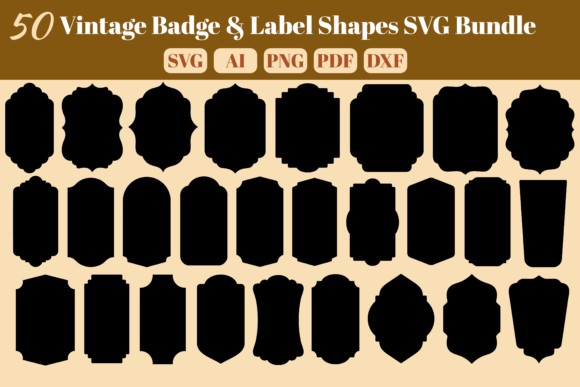
Vector Vintage Empty Frame Labels
Nine blank frame and label shapes in AI, EPS, SVG, PNG and JPEG. Set your own title inside a frame that belongs to no magazine. Rated 5.0 over 2 reviews.

58 Corner Border Elements PNG Clipart
A set of ornamental corners you can place around any picture to build a border that is yours. Rated 5.0 over 1 review.

Grey Toned Junk Journal Overlays
Eight rustic page borders in PNG, made for junk journals. They give you the worn edge of an old page without copying any cover. Rated 5.0 over 3 reviews.
Whichever of these you pick, read the commercial line first. A vintage ornate border frame you can sell on is worth more to you than a prettier one you cannot.
Old paper and ephemera that carry the feel without the cover
The last two parts, the picture and the paper, are what make a print feel like it came out of a drawer. The paper is the part people underrate.
A flat white background turns a vintage idea into a modern one, and a scanned sheet with a torn edge turns it back.
Unlimited creative assets. Access to AI tools.
Commercial licence included.
Browse all
Old Paper Textures
Fourteen sheets of aged parchment in PNG, with the backgrounds removed so the crumpled edges show. Lay one under your own picture. Rated 5.0 over 8 reviews.

Old Handwriting Overlays
Twenty-three 12×12 scans of authentic antique letters and documents. Handwriting at the edge of a picture reads as age at once. Rated 5.0 over 14 reviews.

Shabby Chic Ephemera Kit
Sixty-five elements as printable JPEG and PDF, with PNG versions for cutting machines. A full junk-journal spread in one download. Rated 5.0 over 12 reviews.
A stamp in the corner is the cheapest way to make a print look posted, and the Postage Stamp Digital Stamp Kit gives you forty transparent PNG files and forty SVG files at 300 dpi.
A transparent file matters here.
The Old Letter set is one example: Old Letter Transparent Overlays comes as twenty PNG files at 3000 by 3000 pixels and 300 dpi, so the script sits on any colour and does not drag a white square along with it.
For ideas on stacking them, our 70s design guide shows how texture and type work together.
Check one issue in four steps before you print it
When I do want a real cover, I run the same four steps in the same order and stop at the first no.
- Find the publication year inside the issue. If it is 1930 or earlier, the picture and layout pass. If it is 1964 or later, stop; it is protected.
- For 1931 to 1963, look up the renewal. A renewal on record means protected. No renewal means the term lapsed.
- Look at who made the cover picture. A credited photographer or artist can hold a right of their own, so a free issue does not always give you a free picture.
- Strip the name and the frame. Use the artwork alone, with your own border and lettering. Keep the masthead out of anything you sell.
If an issue passes all four, you have a cover you may print. If it fails any, you have a reference for the look, and the sets above give you the rest.
The step most people skip is the third, and it is the one that catches a free issue carrying a protected picture.
Our screen printing designs guide covers how to separate a design into layers once you know what you can keep.
When a step fails, vintage paper texture is where I go for the base layer.

Questions people ask before they reuse a cover
Can I sell prints of vintage National Geographic covers?
Only if the issue is free by the 1930 line, the cover picture has no separate owner, and your print leaves out the name and the yellow frame.
A cover from 1964 or later is protected and should not be sold.
Is a National Geographic cover from the 1920s in the public domain?
For the US, an issue published in 1930 or earlier is free in 2026, so a 1920s cover usually is. Check the cover picture for a separate credit, and remember the name and frame stay protected.
Can I use a vintage cover in my junk journal?
For a journal you keep, an old page cut and glued is the low-risk end of the hobby.
Selling the finished journal, or a kit of scanned covers, raises the risk, so I switch to licensed ephemera for anything that leaves my desk.
Does buying an old issue let me copy its cover?
No. You own that one copy and may resell it, frame it or hang it. The right to copy the image stays with whoever held it when the issue was printed.
Why do covers from the 1930s to 1960s get complicated?
Those years depend on whether the copyright was renewed. Some issues were renewed and are protected. Others were not and are free. Only a lookup for the specific issue settles it.
Are old National Geographic magazines worth any money?
Most issues are common, so the value sits in the paper and not in the right to the picture.
Which old National Geographic magazines are worth money depends on condition and on a few scarce issues, and an appraisal settles it.
How much are vintage National Geographic magazines worth?
I do not quote figures, because they move with condition and demand. Do old National Geographic magazines have value? Often a small one. Most valuable usually means rare, not old.
Where can I sell, buy or find old National Geographic magazines?
Auction sites, antique shops and collector groups all carry them. Is there a market for old National Geographic magazines?
Yes, mostly for sets and for early issues, and buyers pay for the object, not for the right to copy it.
What do I do with old National Geographic magazines I no longer want?
You can donate them to libraries, schools and charity shops, recycle the paper, or keep a few for crafts.
To get rid of a stack without waste, cut the best pages for a journal first and read the rest before they go.
What can I use instead of a real cover?
A frame, a title area, a free-to-use picture and an old-paper scan, built from sets whose licence names commercial use.
That gives you the cover feel with nothing to infringe, and vintage magazine ephemera is the shelf I check first.
Key takeaways
- A cover is three layers: the picture, the layout, and the name with its frame. Each has its own owner.
- In the US in 2026, an issue published in 1930 or earlier is free. From 1964 on it is protected. The years between depend on a renewal.
- The yellow border and the magazine name are a trademark, and they outlive the copyright on the picture.
- Owning an issue lets you resell or frame it, not copy its cover.
- Of 407 paper and ephemera sets, 184 name the dpi and only 19 name commercial use, so read the licence line first.
- Ready to build the look? Start with the vintage magazine ephemera sets that state the licence.