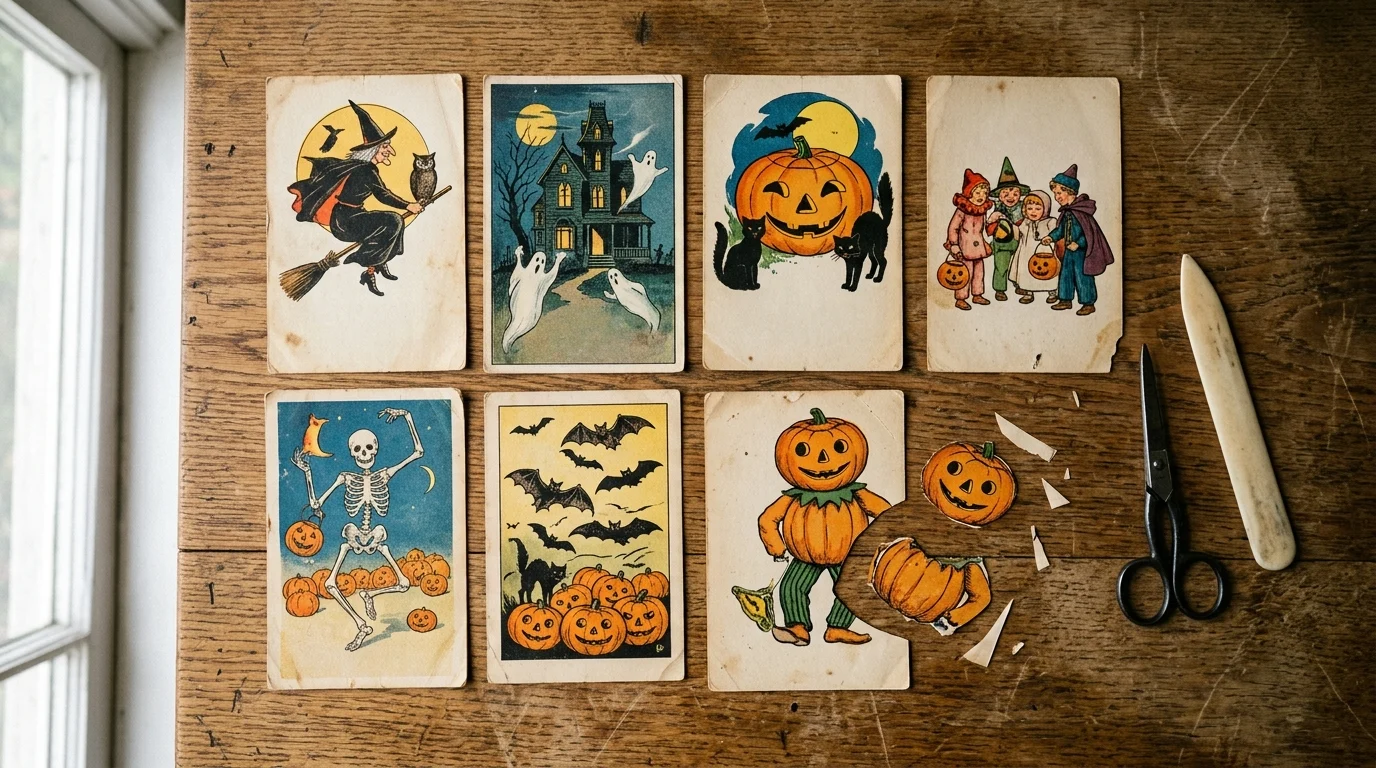
Free vintage Halloween images, public domain halloween scans, transparent background PNG, commercial use: if the plan is a shirt, a sticker, or anything going through a heat press, you need a transparent PNG sized for a real print area, roughly 4500x5400px at 300 dpi. A JPG scan pulled off a public domain archive is fine for a printed page or a junk journal spread, but it comes with a solid background and needs manual cutting before it goes near fabric.
The scans themselves live on large public-domain image archives and stock-photo sites that host scanned postcards, sheet music covers, and old advertising art. What you find there is real: high resolution scans of period paper, black and white halloween clipart alongside hand-tinted color, vintage halloween illustration pulled straight from postcards and trade cards. What you don’t find there is a straight answer on two things: whether the license actually lets you sell what you make, and whether the file is print-ready or just page-ready. Both get answered below with numbers, not opinions. If the plan is a decorative background instead of a print, the junk journal background roundup covers that side of the same file problem.
None of the fifteen free vintage Halloween scans checked carry a transparent background, and their median size works out to 5.6 inches at 300 dpi. That covers a sticker or a journal page comfortably; it runs out well before a full chest print.
For a shop rather than a personal print, Vintage Creepy Halloween Clipart closes that gap: transparent PNG, written commercial license.
Where the Real Vintage Halloween Scans Actually Live
Genuine vintage Halloween scans come from a narrow set of sources: government and university digital archives that digitize public-domain print collections, museum postcard and ephemera collections put online for research, and library digitizations of old trade catalogs and advertising annuals. These are the places actually holding a scanner over period paper.
The free vintage Halloween clipart a buyer actually lands on, though, is most often not from any of those. It comes from aggregator sites that repost the same handful of archive scans, sometimes redrawn or upscaled past their original resolution, so the size and background problems covered below usually trace back to a copy of a copy, not the original archive file.
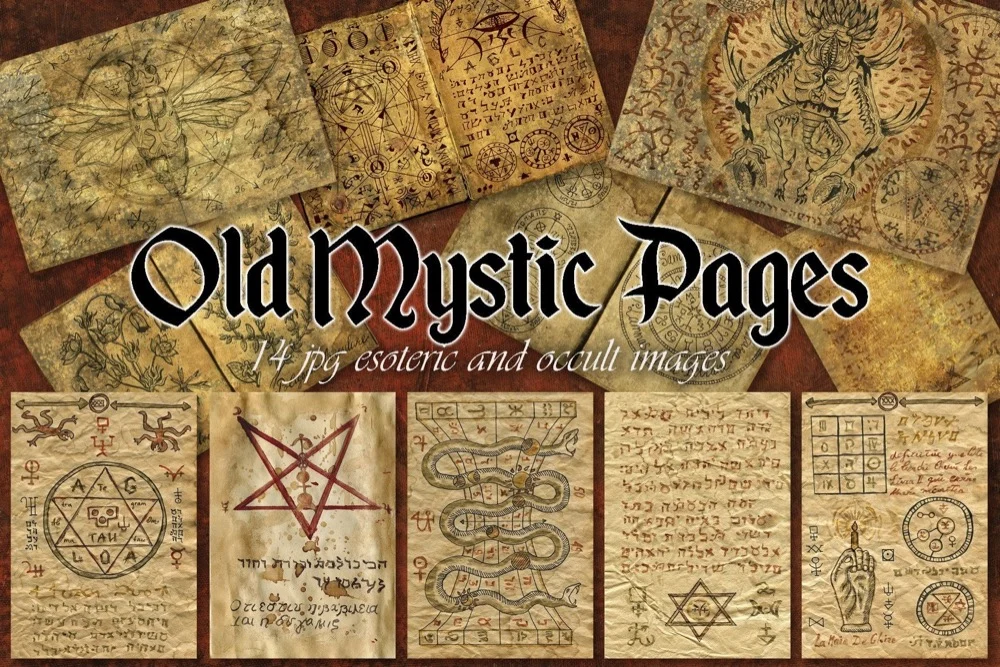
Telling the two apart from the file itself: an archive scan carries the paper’s own tint in its background (the off-white and gray-blue readings measured later in this article), uneven ink density from the original print run, and a native size that tops out well under a full print area. A redrawn or upscaled copy loses those tells: flat, even color where paper should show through, and a resolution that looks suspiciously round for period art. When the archive scan itself doesn’t reach a real print format, Halloween PNG Sublimation Bundle is built at full print size instead.
What “Public Domain” Allows, and What It Doesn’t Promise
Public domain halloween material means nobody currently holds copyright on the image, so you can copy it, print it, and in most cases sell things made from it. That part is what makes these archives worth the download.
But the largest free library in this niche hedges its own claim. Its own disclaimer says, in effect, that the images are believed to be royalty free and in the public domain in the U.S., with no guarantee attached. That’s not a legal problem for a hobby print. It’s a real problem the moment you’re selling shirts under your own shop name and a buyer asks where the art came from.
Nobody in the free-scan space writes a commercial license you can point to. You get a good-faith note, not a document. For a one-off print for yourself, that’s enough. For a shop that lists a design under a brand name and takes payment for it, “as far as I know” is not the same sentence as “licensed for commercial use.” That’s the gap a set with a written commercial license closes before a single design goes up for sale.
Opening a Free Scan the Way a Printer Sees It
Open the file at its native resolution before you decide anything about it. Fifteen of the most-downloaded free vintage Halloween scans, checked at that native size, land at a median long side of 5.6 inches at 300 dpi. That’s a palm-sized image, not a chest print. Twelve of the fifteen come in under 10 inches on the long side entirely.
A 5.6-inch file stretched to fill a full 4500x5400px print area doesn’t just look soft, it loses the line work that made the scan worth downloading in the first place, so the file’s native size decides the project before the design does. A witch silhouette at 5.6 inches makes a good sticker, a good journal sticker sheet, a good small patch. It does not make a full front print without visible upscaling artifacts.
Check this before you commit to a layout: open the file, look at its actual pixel dimensions at 300 dpi, and size the project to the file instead of the other way around. 300 dpi is the point where printed line art stops looking soft at arm’s length, so a file that’s only sharp at 5.6 inches is telling you the size of the finished piece, not just the size of the download. Bleed and margin math for a full print area follows the same logic once the file itself is large enough to hold it.
A file cut to the full 4500x5400px print area from the start skips that math entirely, which is what a set like the Halloween PNG Sublimation Bundle is sized for.
There’s No Transparent Background on These Scans, and Here’s What Follows
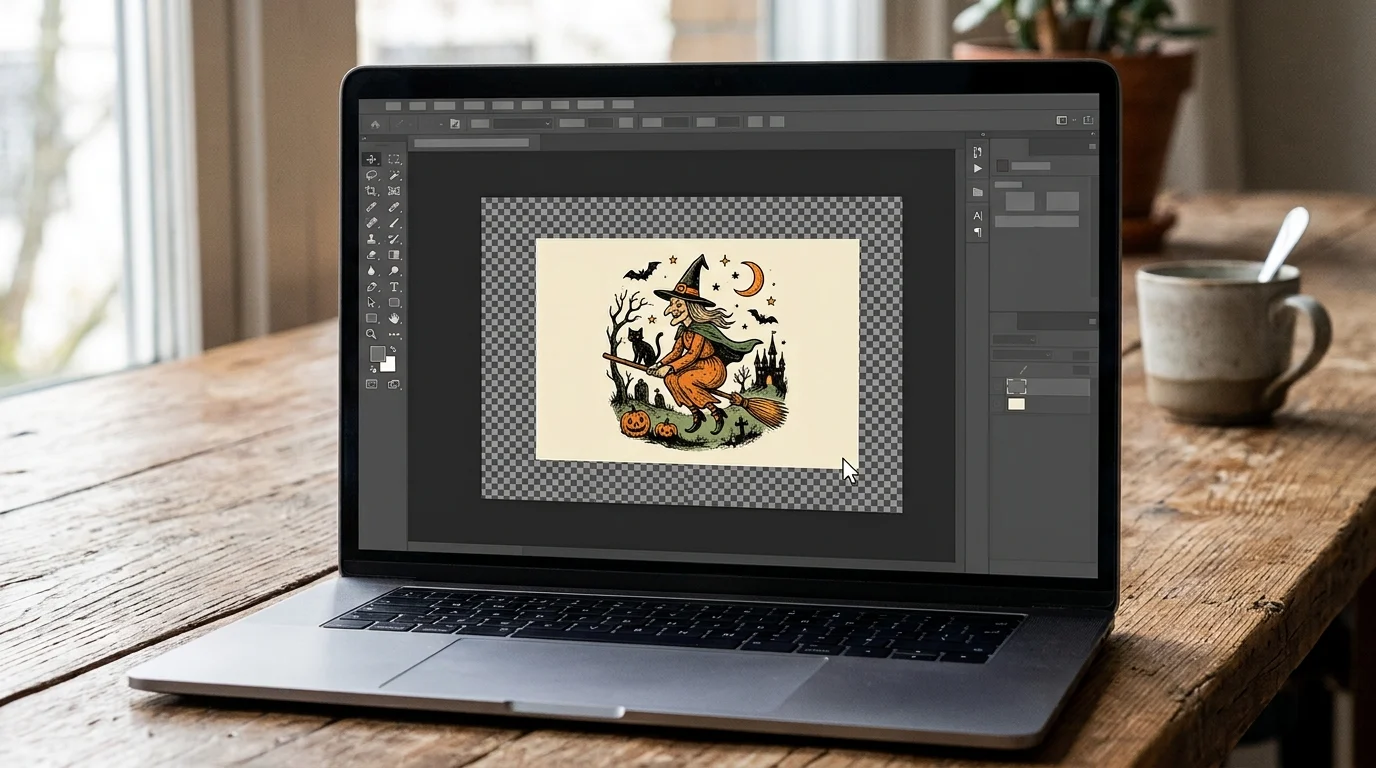
None of the fifteen free scans checked carry an alpha channel. All fifteen are flat JPEGs in RGB, background included. That’s not a download mistake, it’s how a scanned page works: the scanner captures the whole sheet, ink and paper both.
And the paper itself isn’t neutral. On five of the fifteen files, the corner of the sheet reads as cream or a soft blue-gray rather than white, for example an RGB reading around 239,216,188 on one file and 131,128,107 on another. That tint sits behind the artwork on every one of those scans, so a “clean cutout” is never a one-click job. It’s a manual selection around ink that sometimes fades to nearly the same value as the paper it sits on.
 Pin it
For fabric or stickers this matters directly: a JPG background prints as a visible box or halo around the design unless someone removes it by hand in Photoshop or Photopea first. For sublimation and DTF specifically, a design without a true transparent PNG either prints with a background rectangle or needs that manual knockout before it goes to press, and washing behaves differently too. See how sublimation designs hold up in the wash for what a clean edge is actually protecting, or what a shirt-ready sublimation PNG looks like next to a scanned page.
Unlimited creative assets. Access to AI tools.
Commercial licence included.
Get downloads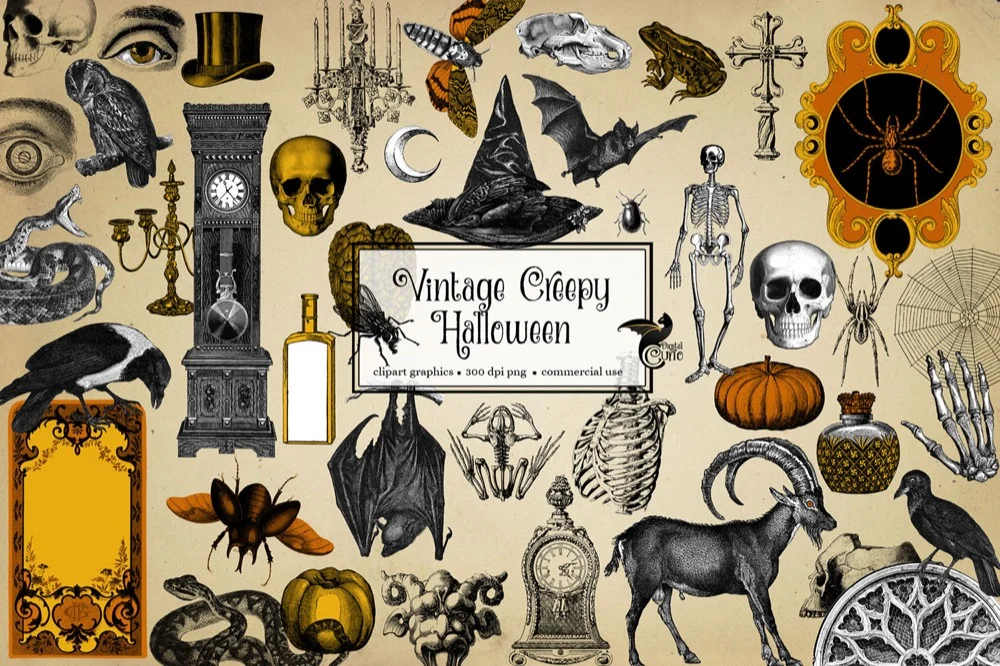
Scan or Redraw: What the File Itself Tells You
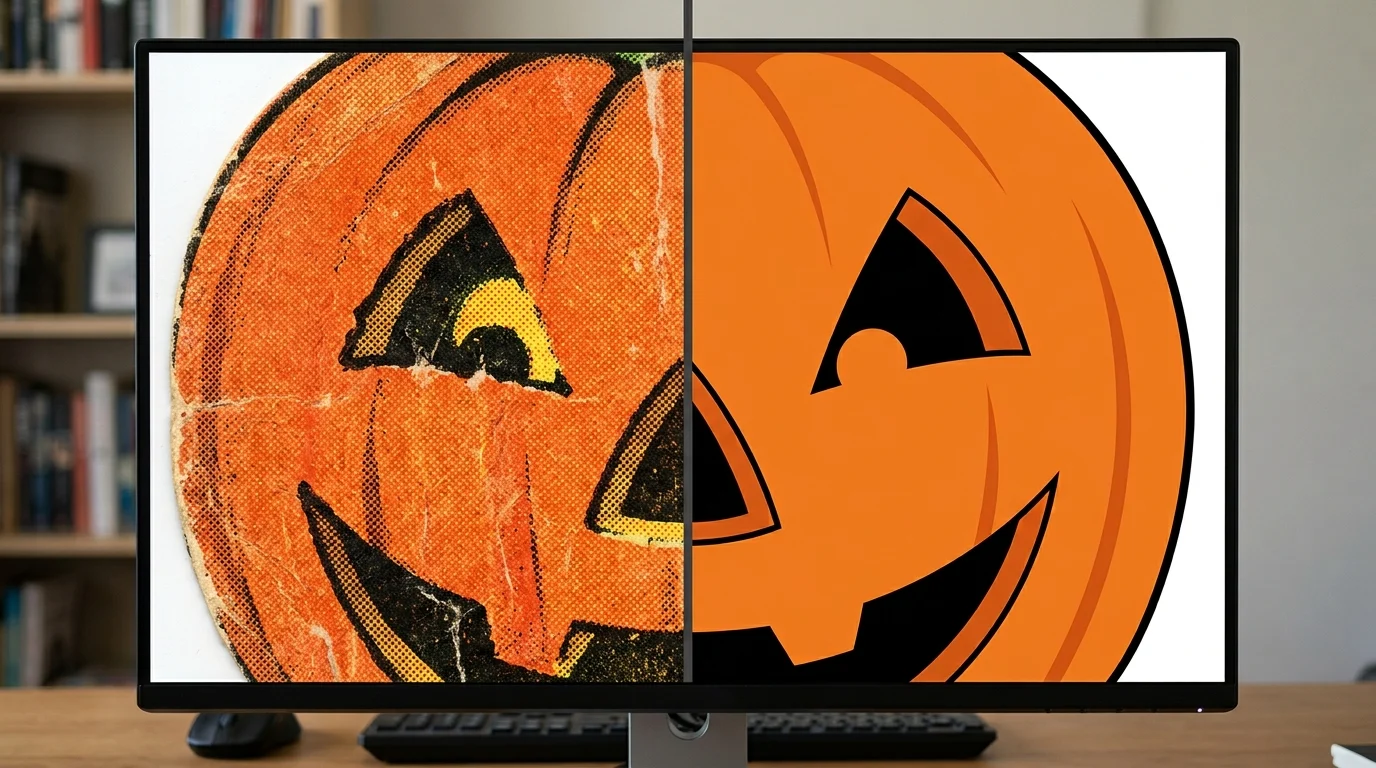
A genuine scan carries the paper it came from: the tinted corner some of these files show (up to 239,216,188 on one, 131,128,107 on another) is evidence of an actual sheet under the scanner bed, not a color someone chose. A redraw traced over a scan and exported flat has no reason to carry that kind of off-white or gray-blue cast, since there’s no physical paper behind it. Checking the background color in the corner of the file is a fast, factual way to tell which one you’re holding, and a listing rarely says outright which one you’re getting until you open the file.
 Pin it
The same check catches clones. When the identical background tint and the identical scan artifacts show up across two “different” images in a bundle, that’s the same source scan reused, not two separate finds. It’s a fast way to tell whether a bundle holds fifteen different pieces of period art or five, repackaged. A set built from separate source scans states its piece count and shows them side by side, the way Gothic Antique Halloween Clipart Bundle does.
This matters more for a shop than for a single print. A buyer scrolling a listing page notices repeated motifs fast, and a shop that lists the same bat three times under three different titles reads as padded, not curated. Checking the file before a design goes live catches that before a customer does. The same scan-versus-flat distinction is what separates a textured sticker sheet from flat clipart on a journal page.
Vintage Here Means 1905-1925, and It Shows in the Details
“Vintage Halloween” as a look points to a fairly narrow window, roughly 1905 to 1925: the postcard-and-trade-card era, before Halloween imagery settled into the round-faced, orange-and-black cartoon style most people picture today. A witch from this window reads differently from a modern witch clipart: a longer, angular nose, a pointed hat with visible fabric folds instead of a flat cone, and a color palette that leans toward muted greens and browns rather than saturated orange.
That’s the detail worth checking before calling something “vintage”: does the linework and palette match the era, or is it a modern illustration dressed in sepia to read as old. Buyers searching vintage halloween art and vintage halloween illustration are looking for the first one.
Unlimited creative assets. Access to AI tools.
Commercial licence included.
Get downloads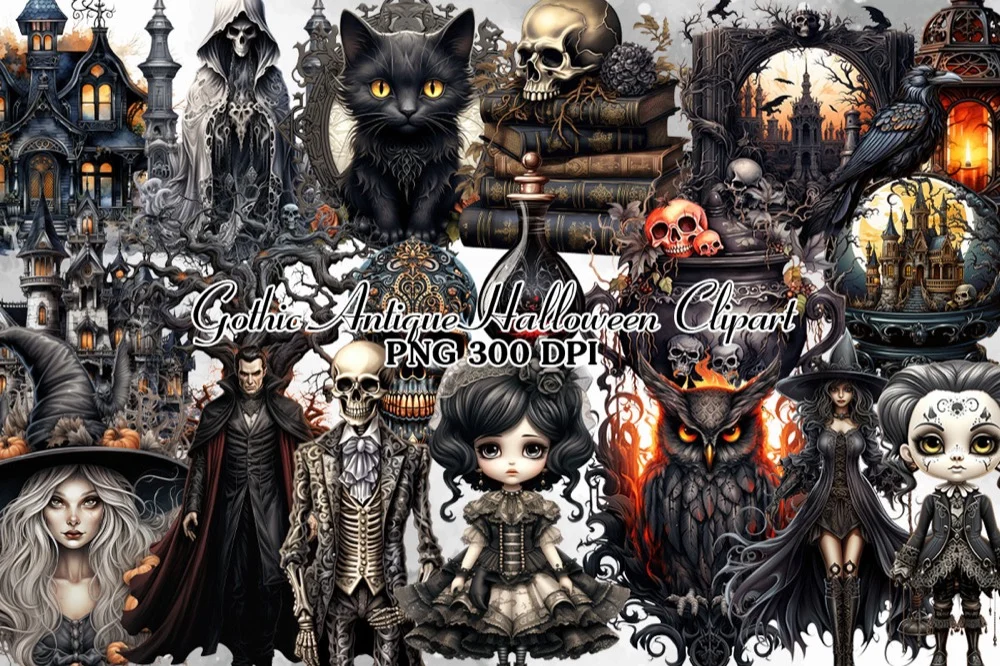
What This Actually Gets Used For: Shirt, Sticker, Frame, Background
The same piece of vintage Halloween art earns its keep in four different jobs, and each one has a different tolerance for the problems above.
- Shirt. Needs the full 4500x5400px print area and a true transparent PNG. A 5.6-inch scan upscaled to fill a chest print is the single most common way this goes wrong.
- Sticker. The most forgiving use for a small native file size, since a design at the 5.6-inch median already sits well above what a sticker needs. A JPG background still has to go before it prints as a clean die-cut shape.
- Framed print. The one place a scan’s own background works in its favor rather than against it: aged paper texture reads as intentional on a wall, not as a mistake. Poster sizing and margins follow the same print-area math as a chest print, just at a larger scale.
- Digital background. Needs a design with no competing focal point, which rules out most single-subject scans and points toward pattern or border-style art instead.
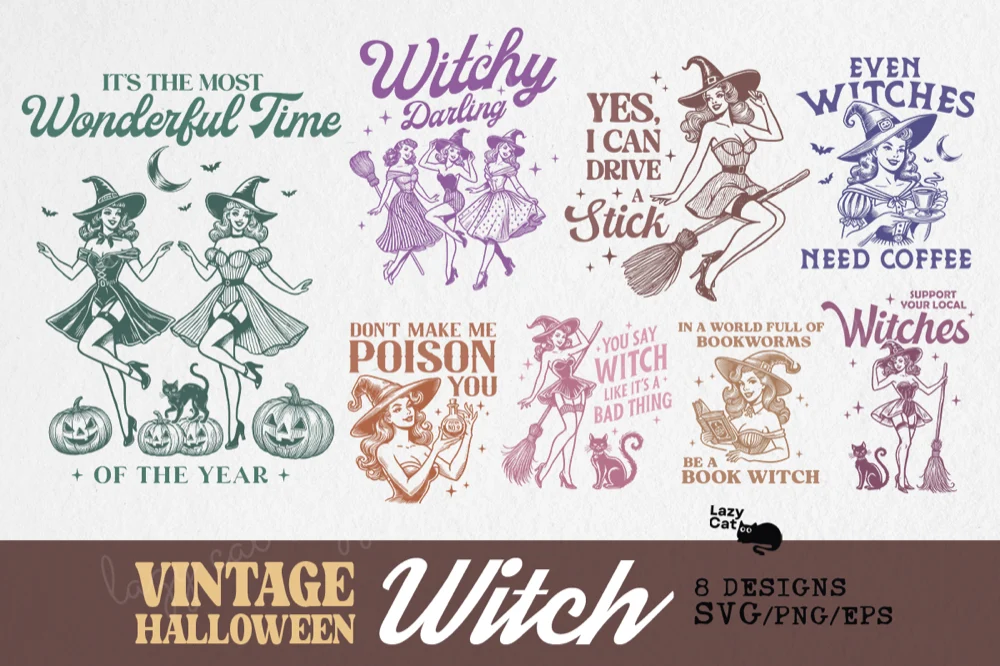
Shirt and sticker sell differently across platforms, too. A single antique witch motif on a shirt converts on Merch by Amazon, where buyers browse by search term and reward a clean, recognizable silhouette. The same motif as a small sticker sheet does better on Etsy, where shoppers are already looking to buy several small items in one order. Listing the identical file both ways rarely performs the same on both.
Unlimited creative assets. Access to AI tools.
Commercial licence included.
Get downloads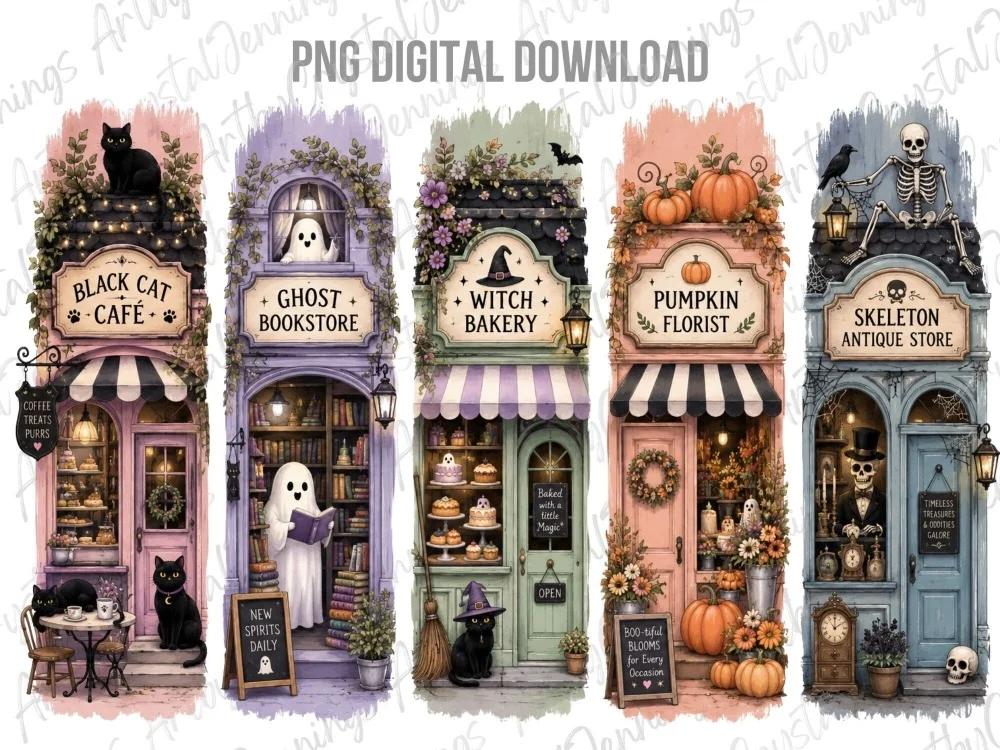
When the Free Scan Runs Out: License, Format, Series
The free download gets a hobby print onto paper. The moment the plan changes to selling shirts, stickers, or prints under a shop name, three limits show up at once: the license is a “believed to be” note, not a document; the format is a flat JPG at a size that runs out around 5-6 inches; and there’s no matching set, so five different scans from five different eras rarely sit together as a coherent product line.
“I’ll download it and then find out selling it wasn’t allowed” is the real hesitation here, and it’s a reasonable one: the largest free library in this space says outright that it can’t guarantee the public domain status of its own images. That line alone is the reason a shop selling finished goods needs something with a written commercial license attached, not just a good-faith note.
None of this is an argument against the free scans. They’re the right tool for a personal print, a journal page, a one-off gift. The line is simply where a hobby turns into inventory: the day a design goes up on a storefront under your shop name is the day “I believe this is public domain” stops being enough documentation to stand behind.
| Can do with a free scan | Can’t do with a free scan |
|---|---|
| Print for personal use, journals, one-off gifts | Rely on a written commercial license |
| Use as a small sticker or patch at native size | Upscale to a full chest print without visible loss |
| Frame as-is, background texture included | Drop straight onto fabric without manual background removal |
| Mix and match individual finds | Sell a matched, styled series |
Unlimited creative assets. Access to AI tools.
Commercial licence included.
Get downloads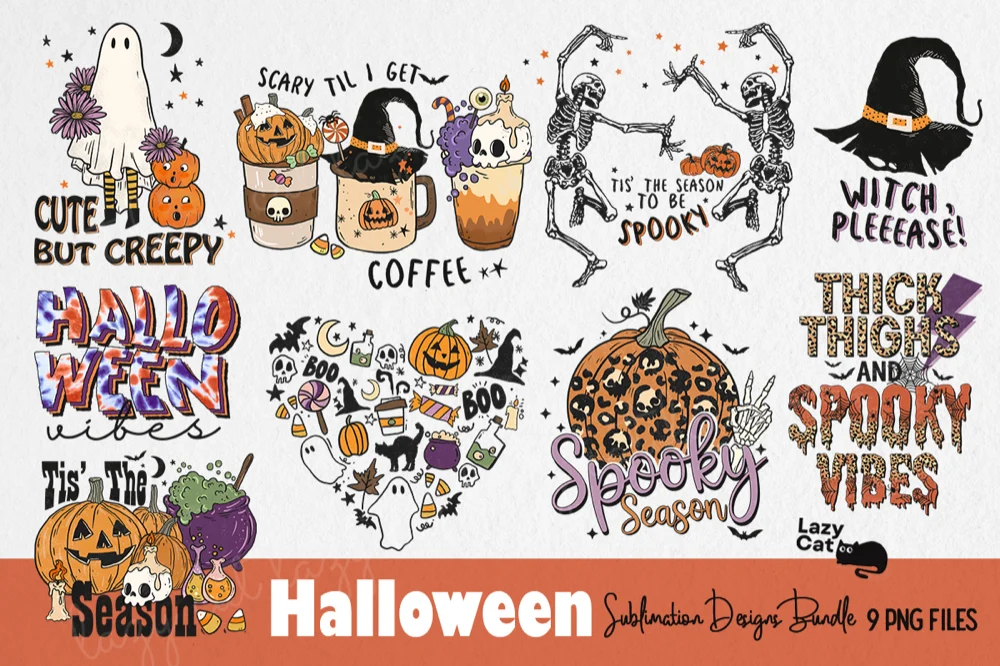
FAQ
Where can I find authentic vintage Halloween images?
Public-domain archives, museum and library digitizations, not clipart aggregator sites. An actual scan carries the paper’s own tint, not a modern illustration styled to look old.
What sizes work best for printing?
A full 4500x5400px file at 300 dpi for a chest print. For a sticker or patch, native scan resolution is enough, since most free scans measured land around 5.6 inches on the long side already.
| Finished piece | Needed at 300 dpi | Median free scan (5.6 in) covers it? |
|---|---|---|
| Full front shirt print | 4500x5400px (15×18 in) | No |
| Left chest print | 1200x1200px (4×4 in) | Yes |
| Die-cut sticker | 900x900px (3×3 in) | Yes |
| Journal page element | 1500x1500px (5×5 in) | Yes |
Are vintage Halloween PNGs free to sell?
A free scan comes with a good-faith public domain note, not a written commercial license. A set like Vintage Creepy Halloween Clipart removes that question before a single item goes up for sale.
Does a free scan have a transparent background?
No. Every free scan checked for this article was a flat JPEG with the paper background baked in, which means manual cutout work before it goes on fabric or a die-cut sticker.
Free scans work for a personal print or a journal page. The moment that print goes up for sale, Vintage Creepy Halloween Clipart is where the license question closes.

Get Licensed Vintage Halloween Clipart
Cleaned, high-resolution designs with a commercial-use license already attached.
See the top pick →