Real antique paper is fragile, acidic, and will eventually eat through the photos you tuck next to it — which is exactly why vintage for scrapbook today almost always means paper printed to look old, not paper that actually is old.
That distinction matters more than it sounds. Genuine 19th-century stock yellows because the cellulose is breaking down, and that same chemical process migrates into whatever sits against it. A printed reproduction gives you the tea-stained look and the same laid-paper texture without any of that risk to your photos.
Quick answer: For most scrapbookers, a printed parchment-style paper pack or a mixed scrapbook kit gives the vintage look safely — acid-free, ready to write or print on, and sized for standard albums. Save actual antique paper for framing, not for pages that touch your photos.
| Product | Best for | Material/Contents | Sheets/Pieces | |
|---|---|---|---|---|
 Pin it Pin it |
80-Sheet Parchment Paper | Double-sided aged pages for backgrounds | Parchment-style printer paper | 80 sheets |
 Pin it Pin it |
Vintage Frame Stickers | Framing photos and journal entries | Self-adhesive frame stickers | 100 pcs |
 Pin it Pin it |
565-Piece Scrapbook Kit | Starting a full album from scratch | Paper, stickers, washi | 565 pcs |
 Pin it Pin it |
Joyberg 70-Piece Parchment | Handwritten letters and journaling pages | Aged-tone parchment paper | 70 pcs |
 Pin it Pin it |
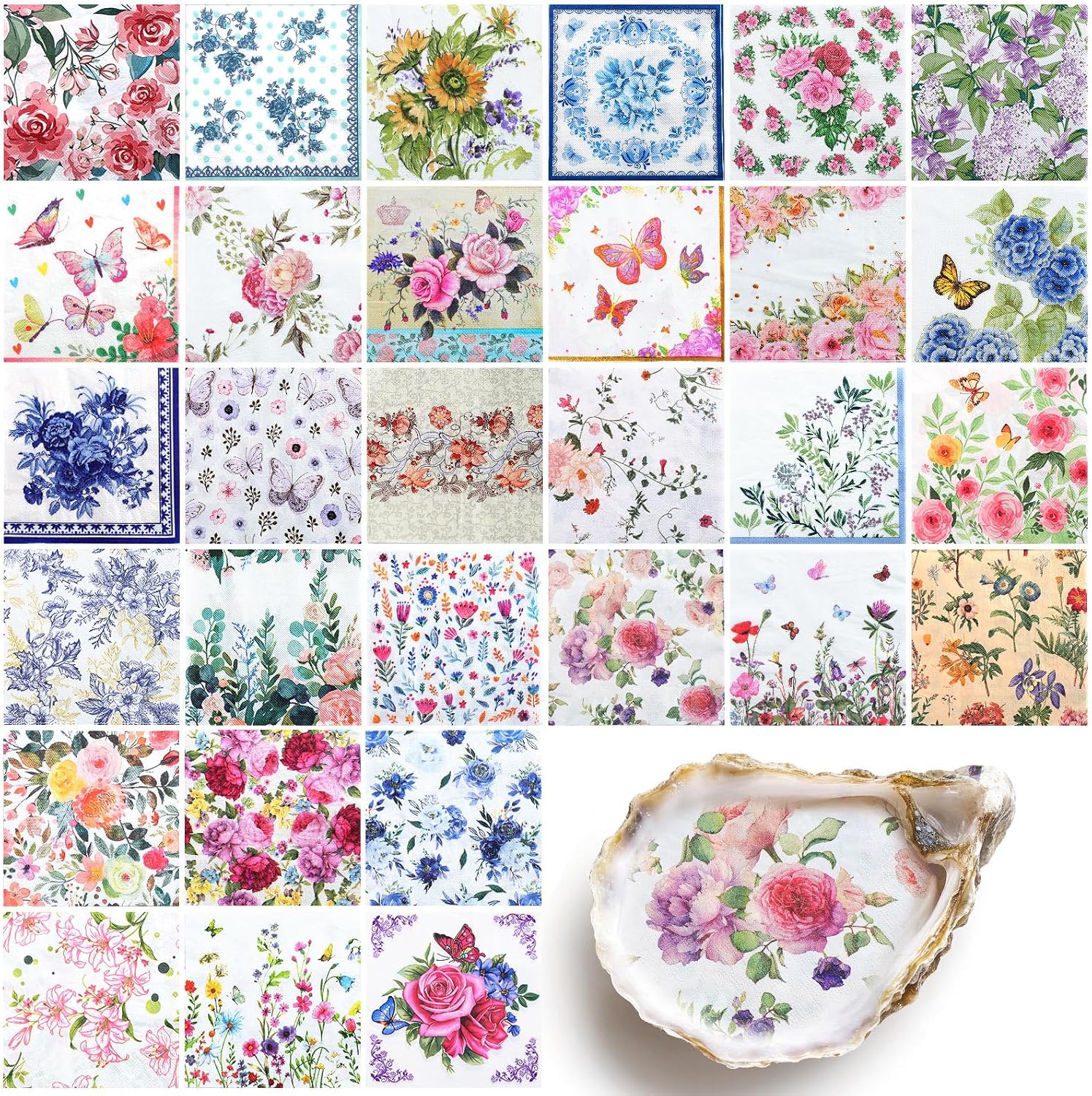
30-Pack Decoupage Napkins | Layered floral backgrounds and collage | Printed paper napkins | 30 designs |
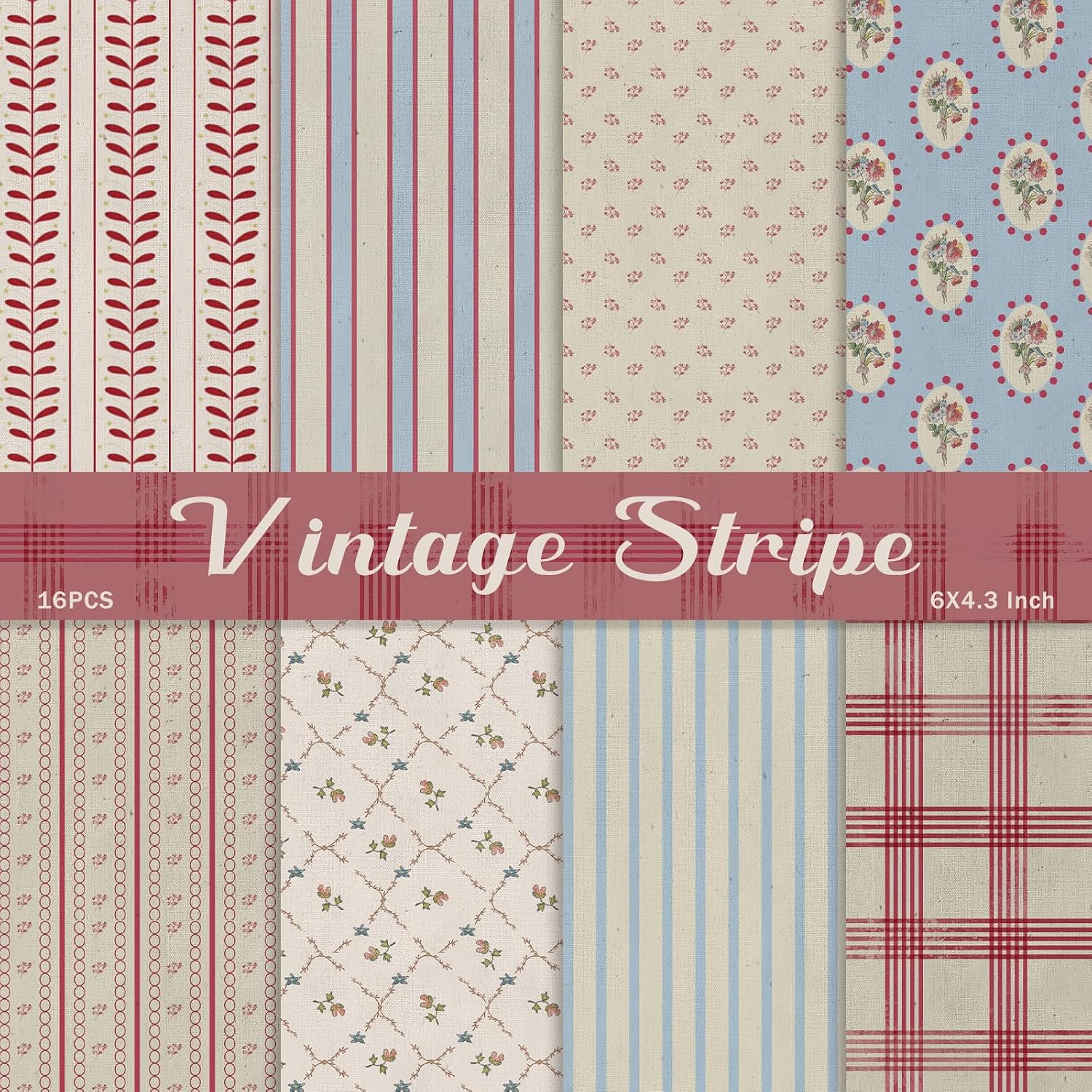
| Vintage Stripe Paper Set | Small cards and mixed-pattern layouts | Single-sided craft paper | 16 sheets (8 patterns) |
The “vintage” look on printed scrapbook paper is built the same way old-fashioned laid paper aged naturally: a warm, uneven tint that mimics oxidized cellulose, sometimes with faint foxing spots or ink-blot textures layered into the print. None of that is real decay — it’s ink on fresh, acid-free stock — which is the whole point. Real antique paper keeps breaking down after you buy it; printed reproduction paper stops there, so the pages you build today still look the same in twenty years instead of turning brittle around your photos.
What Type of Vintage for Scrapbook Paper Do You Actually Need?
Not every vintage-look product is the same category of thing. Some are full sheets meant as a page background — you glue or tape the whole sheet in as a base layer. Others are accent pieces: stickers, napkins, or trim meant to sit on top of a background, not be one. Knowing which category a project calls for saves you from buying 80 sheets of parchment when what you actually needed was a page of frame stickers.
A background-style vintage paper is printed edge-to-edge and usually double-sided, so it works whether you’re building a spread from the front or the back of the sheet. An accent product — stickers, die-cuts, napkin cutouts — is meant to be applied in smaller pieces over a plain or lightly patterned page, adding detail without overwhelming it.
Best for: full-page vintage backgrounds
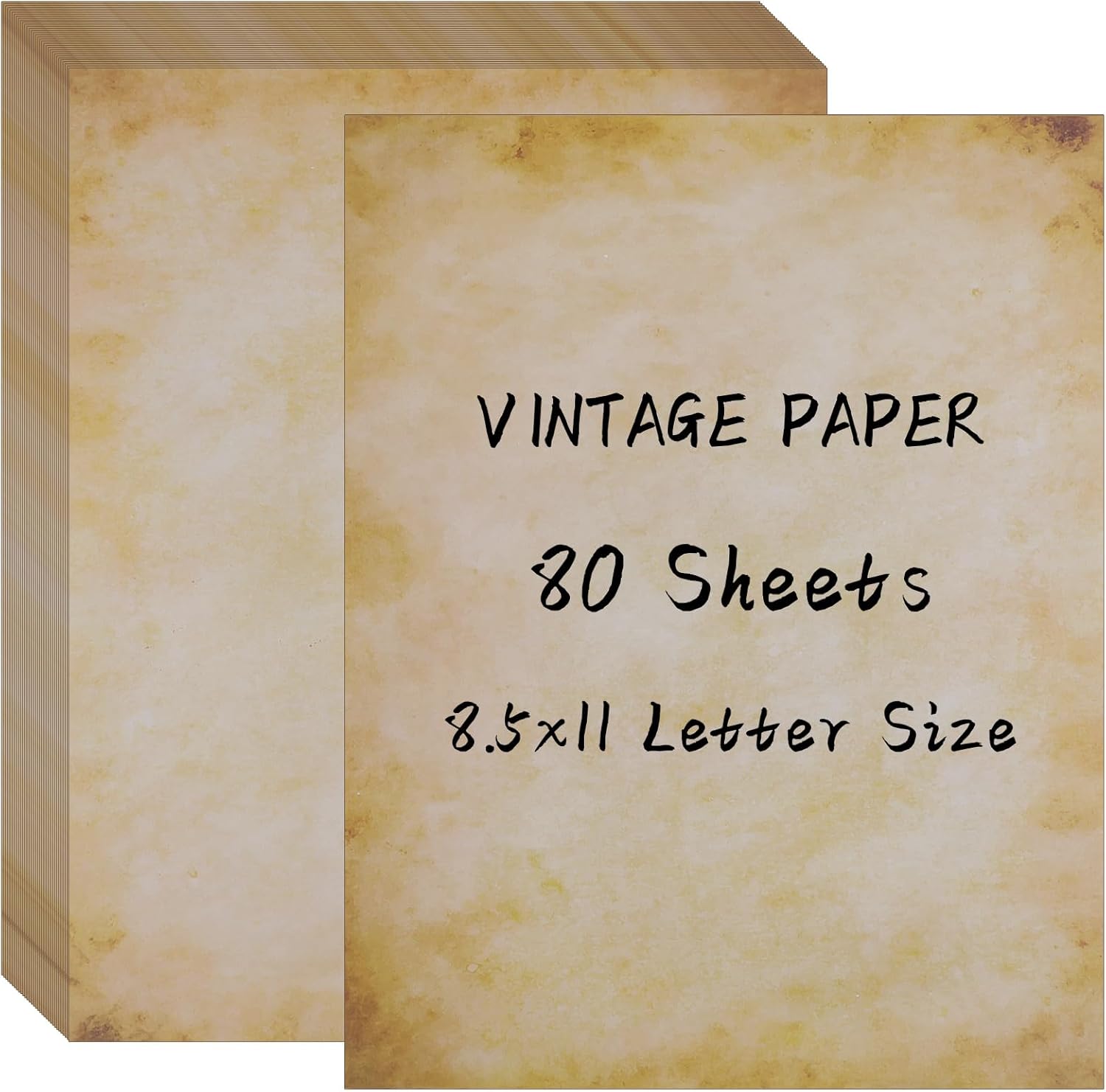
80-Sheet Double-Sided Vintage Parchment Paper
This pack is printed on both sides, which matters more than it sounds — a one-sided vintage sheet forces you to plan every layout around a blank back, while a double-sided one lets you flip it and start a second page without hunting for more stock. At letter size, it also runs straight through a standard inkjet or laser printer, so you can print photos, quotes, or typewriter-style text directly onto the aged-look surface instead of gluing separate elements. The paper itself is thicker than standard printer stock and resists ink bleed-through, which fountain-pen and marker users will notice immediately — thin paper wicks ink sideways and ruins the crisp edge of handwriting. The light yellow base tone reads as aged under any lighting, not just warm bulbs, which is a common failure point in cheaper printed vintage paper that only looks right under yellow light. At 80 sheets, it’s enough to background an entire album without repeating the same page twice in a row.
Best for: framing photos and journal entries
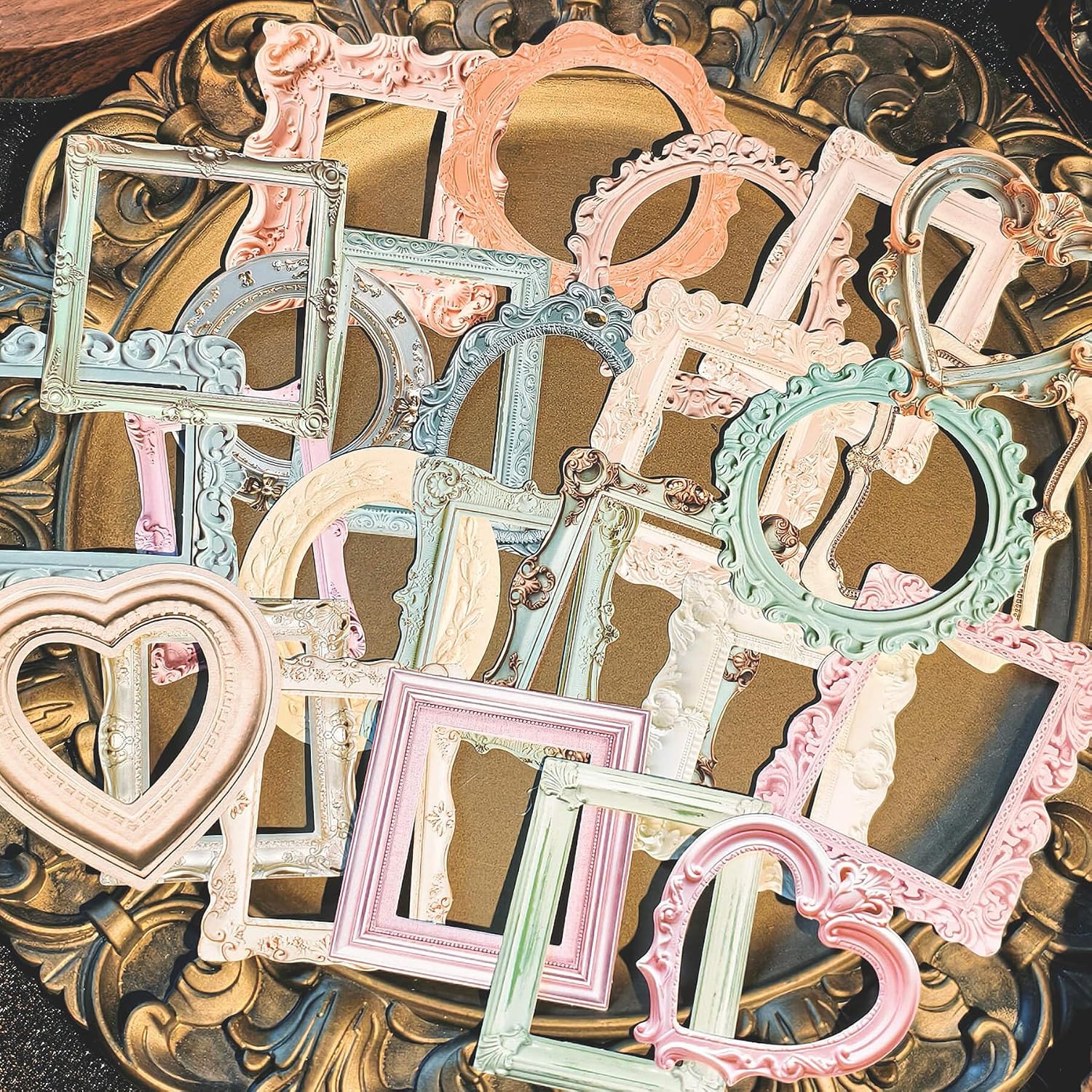
100-Piece Vintage Frame Decorative Stickers
A frame sticker does one job a background sheet can’t: it draws the eye to a specific photo or line of writing instead of spreading attention across the whole page. This set leans into worn gold and bronze finishes with scrollwork detailing, the kind of ornamentation that shows up on actual Victorian-era photo mounts and letter borders. The adhesive is repositionable — it comes off clean without leaving residue, which matters on a page you might rearrange twice before committing to glue. Because they’re small individual pieces rather than one printed sheet, you can mix frame styles across a single spread: an oval scrollwork frame around a portrait, a plainer rectangle around a ticket stub, next to each other on the same page without looking mismatched. That flexibility is the actual reason to buy stickers instead of trying to hand-draw a border — a printed frame is more consistent than most people can freehand, sticker by sticker, across a full album.
Is It Cheaper to Buy One Big Kit Instead of Separate Vintage Papers?
If you’re starting an album from nothing, buying pieces one at a time gets expensive and slow — you end up with a background sheet here, a sticker pack there, and no washi tape that actually matches either. A single scrapbook kit solves the coordination problem by shipping everything pre-matched to the same palette and theme.
The tradeoff is variety. A kit gives you one cohesive look across hundreds of pieces, but if you want a specific accent — say, floral decoupage napkins for a very particular spread — you’ll still need to buy that separately. Think of a kit as the base of the album and individual packs as the finishing touches.
Best for: starting a full album from scratch
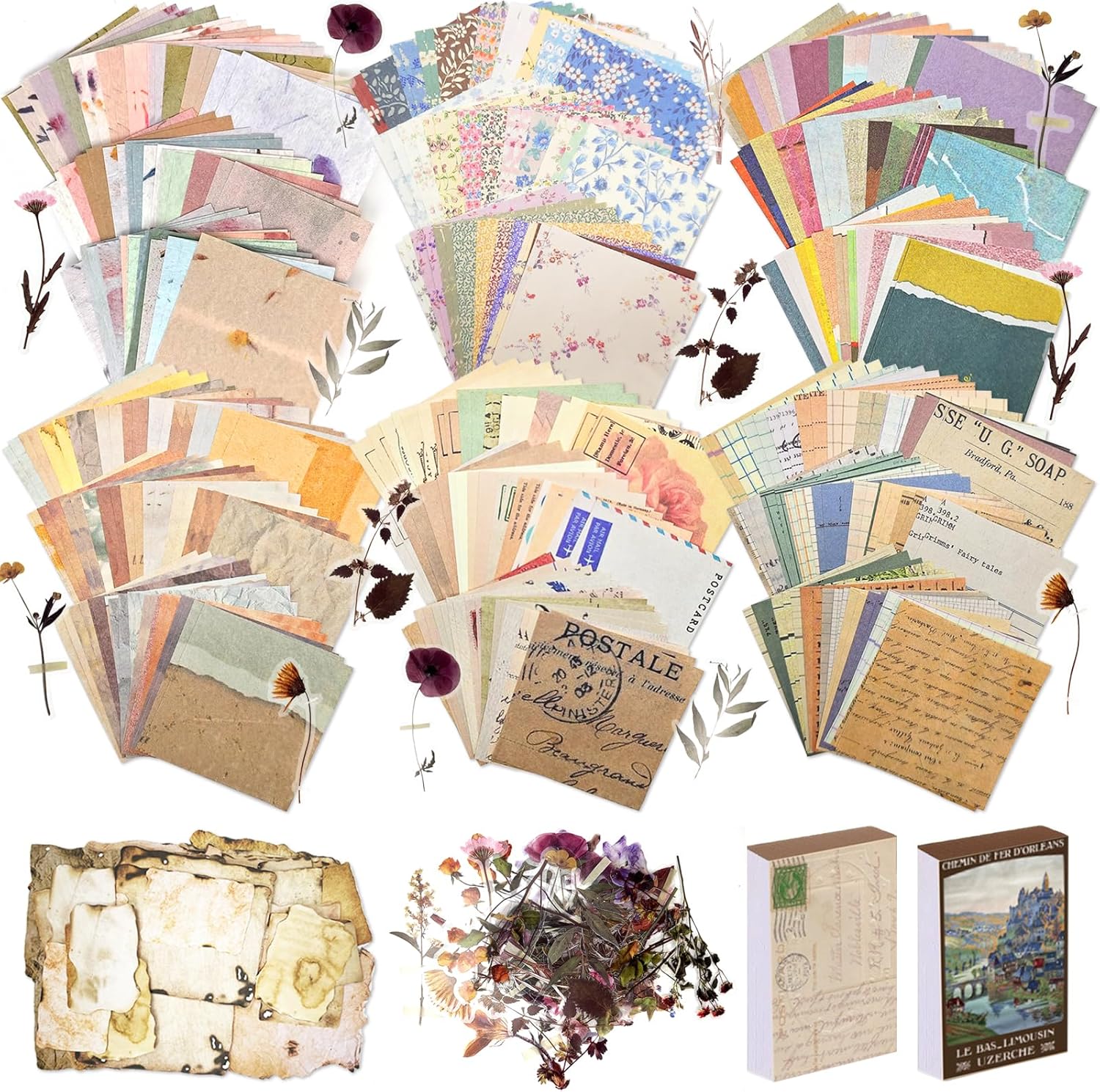
565-Piece Vintage Scrapbook Album Kit
This kit bundles 360 sheets of thin, acid-free decorative paper across six visual series, plus 45 vintage writable stickers, 40 sheets of floral stickers, and 120 pieces of washi paper — all pre-coordinated so nothing in the box clashes with anything else in it. Acid-free is the detail worth pausing on: it’s the difference between paper safe to press directly against a photograph for decades and paper that will slowly discolor whatever it touches. Because the series are grouped by theme rather than randomly mixed, you can commit an entire spread to one series and know the colors and motifs will hold together without cross-checking swatches. The compact sheet size also means less waste — you’re not cutting down oversized paper to fit a small journal page, which is a common complaint with bulk vintage paper packs sized for scrapbooks twice the size of what most people actually use.
What Makes Vintage Scrapbook Images Look Handwritten Instead of Printed?
A lot of the handwritten letter aesthetic in vintage scrapbook images comes down to the paper reacting to ink the way old stock actually did — slight texture, minimal bleed, and a surface that holds a fountain pen line without feathering. Modern smooth copy paper does the opposite: ink sits on top and spreads, which instantly reads as a photocopy rather than a letter.
That’s a paper-weight and coating problem, not a pen problem. Parchment-style paper made for this purpose is usually thicker than standard printer stock and finished to resist bleed, so cursive, calligraphy, and even ballpoint hold a crisp line the way they would on genuinely old paper.
Best for: handwritten letters and journaling pages
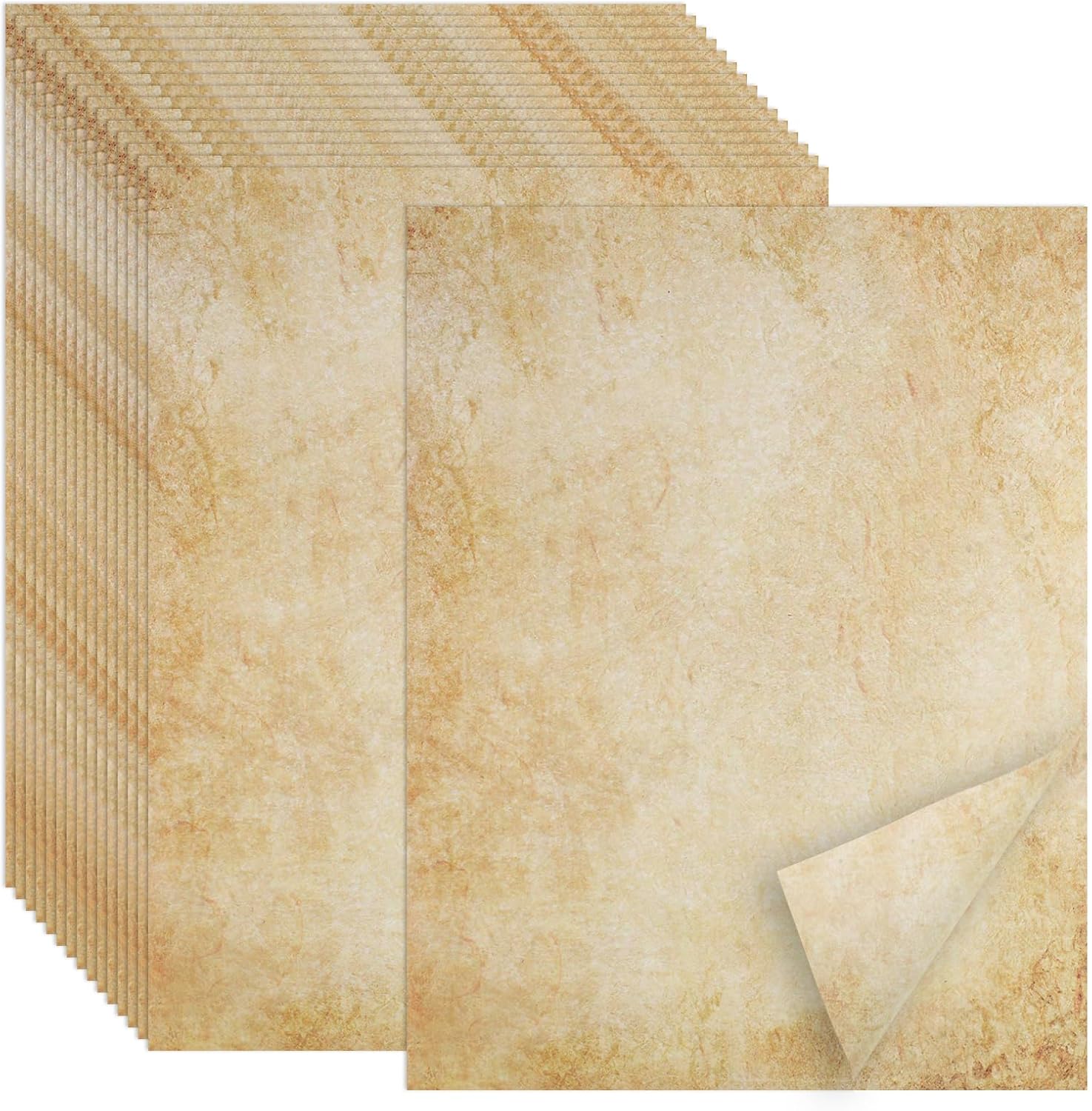
Joyberg 70-Piece Vintage Parchment Writing Paper
This pack is built specifically around the writing use case rather than as a general craft paper — it’s finished to resist ink bleed-through, so a fountain pen or gel pen holds its line instead of feathering into a blurry mess the way it does on thin copy paper. At 8.5×11 inches it fits standard envelopes and printer trays, so you can hand-write a letter-style journal entry or run it through a printer for a mixed print-and-write page. The aged tone is consistent sheet to sheet, which matters if you’re writing a multi-page letter or journal spread and don’t want an obvious color shift halfway through. It reads as genuinely old under normal room light, not just staged photography light, which is where a lot of cheaper “antique” paper falls apart once you actually use it on a desk instead of in a product photo.
How Do You Add a Vintage Scrapbook Background Without Covering Your Photos?
Full-sheet backgrounds are great for setting a mood, but they can crowd a page if the print pattern competes with the photo sitting on top. Layered accents — small cutouts, torn-edge scraps, napkin florals — solve this by adding texture around the photo instead of behind it, so the eye still lands on the picture first.
Decoupage-style paper napkins are an underused option here because they’re thin enough to layer without adding bulk, and the printed pattern is usually designed as a repeating motif you can cut into pieces rather than one fixed scene, so you use only the section that fits your layout.
Best for: layered floral backgrounds and collage accents
30-Pack Floral Decoupage Paper Napkins
Decoupage napkins are made from thin, multi-ply tissue-weight paper, thin enough that you can layer two or three cutouts without building up noticeable thickness on a page — something a full-weight scrapbook sheet can’t do. This set includes 30 distinct floral designs on FSC-certified paper, unfolding to roughly 13 inches square, so a single napkin can be cut into several smaller motifs for different pages. Because the pattern repeats across the sheet rather than being one large fixed image, you’re not stuck using the whole napkin at once — trim around a single flower cluster and save the rest for another spread. The paper is treated to resist fading and tearing once mounted, which matters since thin decoupage paper is otherwise the most fragile material on this list once it’s glued down and handled.
Best for: small cards and mixed-pattern layouts
Vintage Stripe Single-Sided Scrapbook Paper Set
At 4.1×5.8 inches, these sheets are sized closer to a greeting card than a full scrapbook page, which makes them a better match for smaller projects — mini albums, tags, and card fronts — where a letter-size sheet would need to be cut down anyway. The set includes eight distinct striped patterns, two sheets each, so you get enough repetition to use the same pattern across a small series of cards without running out mid-project. Being single-sided isn’t a downside here: the blank back stays ink-free, which means you can write directly on the reverse without it showing through the printed front, something double-sided paper can’t offer. The stock is tear-resistant and holds up to folding, which matters more on small pieces that get handled and repositioned more than a full-page background typically does.
Looking for more scrapbook paper ideas? Our guide to vintage paper for scrapbook pages breaks down other background styles, and our vintage floral scrapbook paper roundup covers more floral-pattern options if that’s the direction you’re leaning.
Printable Kits: Photo Safety Comes From Your Paper, Not the File
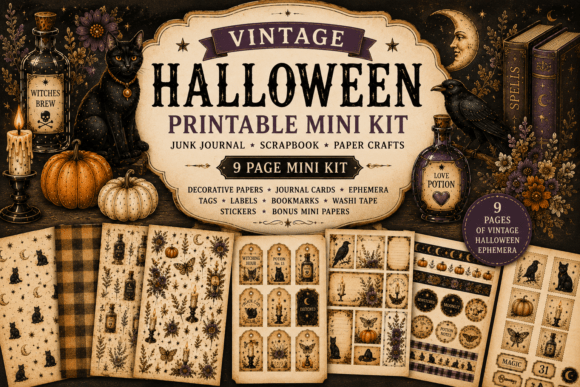
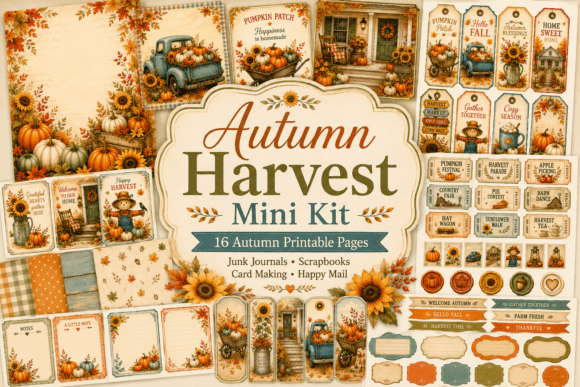
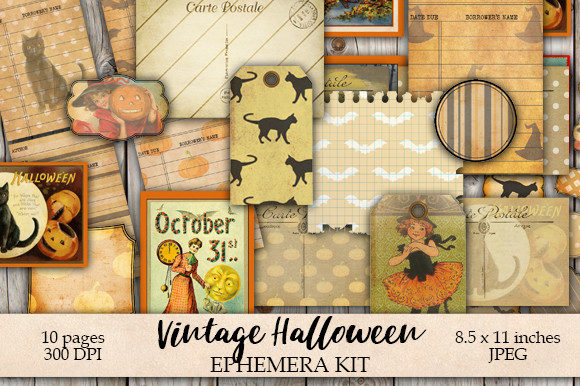
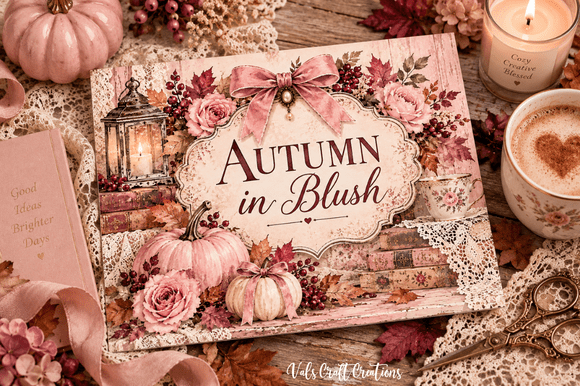
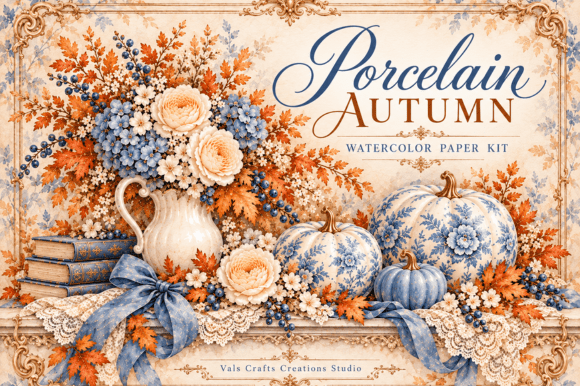
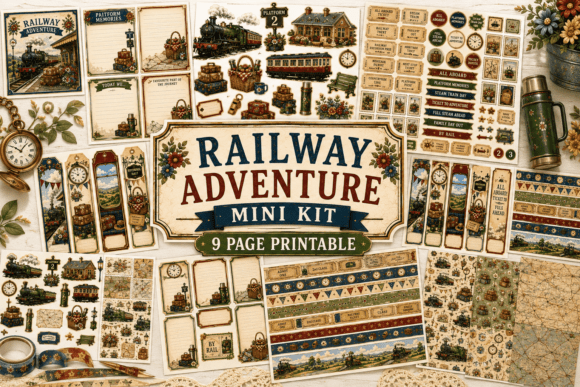
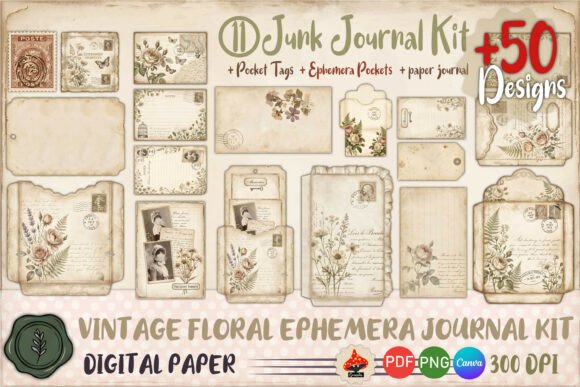
If you print your vintage papers instead of buying a boxed kit, the file can look aged but it cannot protect a photo. Out of 248 vintage scrapbook and junk journal paper kits on sale at Creative Fabrica, 167 mention aged, stained or worn effects, yet none mention acid-free or archival paper, and only 3 mention a paper weight.
That part is up to you. Print on acid-free cardstock, let inkjet pages dry overnight before they touch a photo, and keep old originals behind a clear sleeve or use a copy instead.
Real Aged Look or a Sepia Filter?
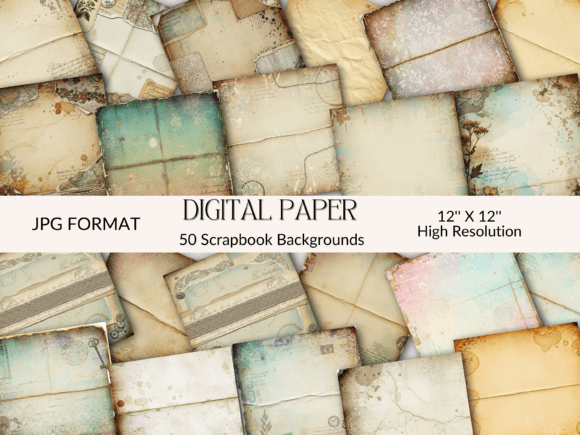
Most vintage scrapbook paper is reproduction, which is fine once you know how to spot the good kind. Look for foxing spots, ledger lines and script lifted from real letters, and torn or deckled edges. A modern floral with a brown tint over it is the weak version: 19 of the 248 kits lean on the word sepia, so zoom in on the preview before you buy.
- Single-sided sheets are better for layering torn pieces and for writing, since no pattern shows from the back.
- Loose paper lets you add pages later; a bound album is faster but fixed once full.
- Store finished pages flat and out of sunlight, because aged-look paper still fades under light.
Key Takeaways
- For full-page backgrounds, the 80-Sheet Double-Sided Vintage Parchment Paper prints on both sides and runs through a home printer without bleed-through.
- Starting from zero? The 565-Piece Vintage Scrapbook Album Kit bundles acid-free paper, stickers, and washi in matched series so nothing clashes.
- Writing letters or journal entries by hand works best on the Joyberg 70-Piece Vintage Parchment Writing Paper, finished specifically to resist ink bleed.
- For small cards or layered accents instead of full backgrounds, the Vintage Frame Decorative Stickers and Floral Decoupage Napkins add detail without overwhelming a photo.
About the Author: Alina Farley writes about vintage-style crafting and print-on-demand design trends for Vintage Tee Studio, drawing on years of tracking what actually sells for Etsy and Amazon sellers.

Frequently Asked Questions
Is printed vintage scrapbook paper safe to use with old photos?
Yes, as long as it’s labeled acid-free — most printed vintage-style scrapbook paper is made this way specifically because real antique paper isn’t safe for long-term contact with photographs.
Can I print my own photos directly onto vintage scrapbook paper?
Many printed parchment-style papers are compatible with home inkjet and laser printers, but check the listing first — some decorative or textured papers are meant for writing only, not for running through a printer.
What’s the difference between vintage scrapbook paper and vintage scrapbook wallpaper?
They’re often the same printed aesthetic, just sized differently — wallpaper style vintage prints tend to be larger sheets or rolls meant for backgrounds, while scrapbook paper is cut to album or card size.
Do vintage frame stickers work on both photos and journal text?
Yes — the adhesive frame styles are commonly used around printed photos, ticket stubs, and handwritten journal entries alike, since the frame is decorative rather than tied to one type of content.
How many sheets of vintage scrapbook paper do I need for one album?
It depends on album size, but a starter kit with a few hundred pieces (paper, stickers, and washi combined) is usually enough for a full album without repeating the same background twice in a row.